
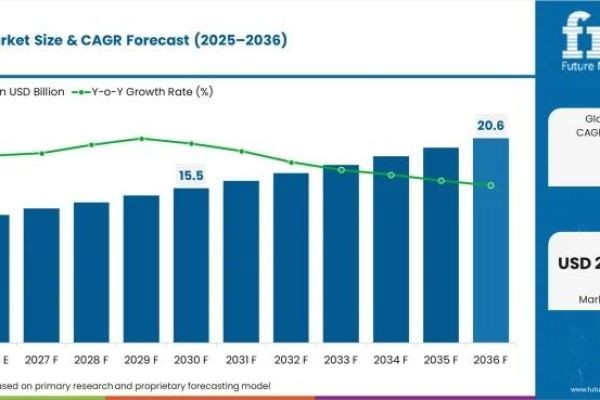
The global trash bag market is experiencing consistent growth as rapid urbanization, stricter waste management regulations, and rising public hygiene awareness continue to transform waste disposal practices worldwide. Valued at USD 12.3 billion in 2025, the market is projected to reach USD 12.9 billion in 2026 and further expand to USD 20.6 billion by 2036, registering a CAGR of 4.8% during the forecast period.
The industry is gradually evolving from a price-driven commodity market into a sustainability-oriented and performance-focused sector. Manufacturers are increasingly emphasizing biodegradable materials, recycling-compatible solutions, product durability, and operational efficiency to strengthen long-term competitiveness.
Get detailed market forecasts, competitive benchmarking, and pricing trends:
https://www.futuremarketinsights.com/reports/sample/rep-gb-18861
Quick Stats: Trash Bag Market
- Market Value (2025): USD 12.3 Billion
- Estimated Market Value (2026): USD 12.9 Billion
- Forecast Market Value (2036): USD 20.6 Billion
- CAGR (2026-2036): 4.8%
- Fastest Growing Countries: India (7.2%), Brazil (6.8%), China (6.7%)
- Leading Product Segment: Drawstring Bags (41.0% share in 2026)
Urban Expansion and Organized Waste Collection Supporting Market Growth
The rising pace of urban development across emerging and developed economies is significantly increasing municipal solid waste generation. Expanding residential communities, healthcare institutions, commercial facilities, and industrial infrastructure are driving higher demand for efficient waste collection and containment products.
At the same time, governments and municipalities are strengthening sanitation systems, recycling programs, and waste segregation frameworks, creating sustained opportunities for trash bag manufacturers across residential, institutional, and industrial applications.
Major market growth factors include:
- Expansion of municipal waste management infrastructure
- Growing awareness regarding hygiene and sanitation
- Increasing adoption of waste segregation initiatives
- Rising healthcare and commercial waste disposal requirements
- Growth of retail and e-commerce distribution channels
Sustainability Trends Accelerating Material Innovation
Environmental regulations targeting plastic waste reduction and landfill management are reshaping product development strategies across the industry. Manufacturers are increasingly focusing on sustainable and environmentally compliant materials such as:
- Biodegradable polymers
- Recycled plastic content
- Compostable waste liners
- Lightweight and energy-efficient manufacturing technologies
The shift toward sustainability is opening new growth avenues for companies capable of balancing environmental compliance, durability, and cost-effectiveness. Early investments in sustainable product innovation are expected to strengthen long-term market positioning.
Product and Segment Insights
Consumer demand continues to favor convenience-oriented and household-focused trash bag solutions with improved functionality and ease of disposal.
Drawstring Bags Continue to Dominate Demand
Drawstring Bags are projected to account for nearly 41.0% of total market demand in 2026. Their convenience, leak resistance, and ease of handling continue to drive adoption across residential, retail, and institutional applications.
Small-Capacity Bags Retain Strong Market Share
Small-capacity bags ranging between 4–8 gallons are expected to capture 35.4% of the overall capacity segment in 2026. Demand remains particularly strong in residential waste bins, bathrooms, and light commercial environments.
Premium, durable, and sustainability-focused products are anticipated to outperform conventional low-cost alternatives as environmental standards and consumer expectations continue to evolve.
Regional Outlook and Global Expansion Trends
Growth opportunities remain strongest in countries investing heavily in urban sanitation and organized waste management systems.
- India is expected to record the highest growth at a CAGR of 7.2% through 2036, supported by rapid urbanization and government-led sanitation initiatives.
- Brazil is projected to expand at a CAGR of 6.8% due to increasing municipal waste management investments.
- China is anticipated to witness a CAGR of 6.7%, driven by stricter hygiene regulations and waste segregation practices.
- Germany and the United States continue to generate stable demand supported by premium institutional procurement and sustainability-focused purchasing trends.
Commercial and Institutional Applications Driving Premiumization
Commercial offices, healthcare providers, food service establishments, and industrial facilities are increasingly seeking high-performance waste containment products that meet strict hygiene, durability, and compliance requirements.
These sectors are generating premium-value opportunities through:
- Contract-based purchasing agreements
- Compliance-oriented procurement practices
- Heavy-duty waste handling applications
- Specialized hygiene and medical waste disposal requirements
Institutional buyers are also prioritizing suppliers capable of delivering consistent quality, regulatory compliance, and reliable distribution capabilities.
Competitive Landscape
The global trash bag market remains moderately consolidated, with leading companies competing through sustainability innovation, manufacturing capacity expansion, product diversification, and strong retail distribution networks.
Key players operating in the market include:
- The Glad Products Company
- Berry Global Inc.
- Reynolds Group Holdings
- Novolex Holdings Inc.
- Poly-America L.P.
- Inteplast Group
- AEP Industries Inc.
- Cosmoplast Industrial Company
- Dagoplast AS
- Four Star Plastics
Large manufacturers continue leveraging economies of scale, sustainability investments, and long-term retail partnerships to strengthen market presence, while emerging regional companies focus on niche applications and differentiated product offerings.






