
Footwear packaging has evolved far beyond basic storage and transportation. Today, shoe boxes are an essential part of the brand experience, influencing customer perception, product safety, and sustainability goals. As footwear brands compete in crowded retail and eCommerce environments, modern cardboard shoe boxes have become a strategic tool for improving presentation and operational efficiency.
One of the key factors driving this evolution is shoe box packaging design, which now focuses on functionality, aesthetics, and environmental responsibility. Brands are rethinking how shoe boxes look, feel, and perform—from the moment a customer sees them on a shelf to the unboxing experience at home.
The Shift Toward Modern Cardboard Shoe Boxes
Traditional shoe boxes were designed primarily for storage. Modern footwear packaging, however, emphasizes versatility and branding without sacrificing protection. Cardboard materials allow brands to experiment with structure, finishes, and printing techniques while keeping packaging lightweight and cost-effective.
This shift reflects broader consumer expectations, including sustainability, minimalism, and convenience. Cardboard shoe boxes align well with these demands because they are recyclable, adaptable, and suitable for both retail display and shipping.
Sustainable Materials as a Core Trend
Sustainability has become a defining trend in footwear packaging. Many brands now prioritize eco-friendly shoe packaging to reduce environmental impact and appeal to conscious consumers.
Key sustainability-focused developments include:
- Increased use of recycled cardboard
- Reduced plastic inserts and coatings
- Minimal ink coverage and water-based inks
- Lightweight structures that reduce shipping emissions
Corrugated shoe boxes, in particular, offer strength and recyclability, making them ideal for brands that want durable yet responsible packaging solutions.
Enhanced Protection for Shipping and Storage
With the growth of online footwear sales, packaging must withstand long-distance shipping and repeated handling. Modern cardboard shoe boxes are engineered to protect products without adding unnecessary bulk.
Protective features commonly used today include:
- Reinforced corners and edges
- Snug internal sizing to prevent movement
- Corrugated layers for shock absorption
- Secure lid designs that prevent accidental opening
These improvements help reduce product damage, returns, and customer dissatisfaction.
Minimalist and Clean Visual Aesthetics
Another notable trend is the move toward minimalist design. Instead of overly complex graphics, many brands are choosing clean layouts that emphasize logos, typography, and subtle textures.
Printed shoe boxes often follow a “less is more” approach, using:
- Neutral or brand-specific color palettes
- Matte finishes for a premium feel
- Simple icons or pattern accents
- Clear, readable labeling
This visual clarity enhances shelf appeal and aligns with modern branding principles.
Customization for Brand Identity
Customization remains a major trend in footwear packaging. While box structures may stay consistent, visual and functional elements are often tailored to match brand identity and product lines.
Customization options include:
- Size variations for different shoe models
- Internal printing for branding continuity
- Seasonal or limited-edition artwork
- Custom inserts for added product support
Footwear packaging boxes that reflect a brand’s identity help create consistency across retail locations and online orders.
Smart Packaging for Better Customer Experience
Modern shoe packaging increasingly focuses on user experience. Easy-open lids, reusable structures, and stackable designs improve convenience for both retailers and consumers.
User-focused features include:
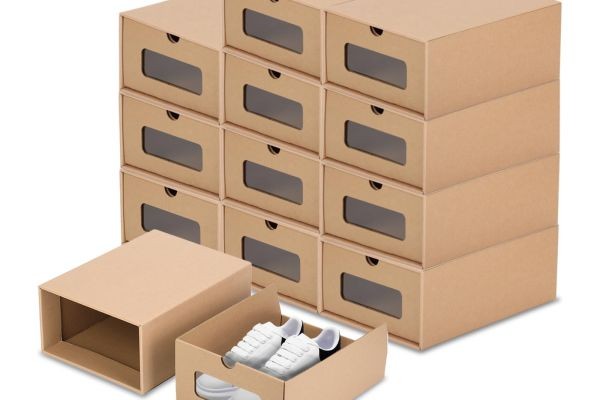
- Pull-tab or slide-out box styles
- Boxes designed for reuse or storage
- Clear size and product labeling
- Compact designs that reduce clutter
These functional improvements contribute to a smoother unboxing experience while maintaining product safety.
Role of Printing Technology in Modern Shoe Boxes
Advancements in printing technology have expanded design possibilities for cardboard shoe boxes. High-quality printing allows brands to achieve sharp graphics, consistent colors, and detailed branding without compromising sustainability.
Common printing trends include:
- Digital printing for short runs and customization
- Offset printing for large-scale consistency
- Water-based inks for eco-conscious production
- Spot finishes for subtle visual emphasis
Printed shoe boxes now balance visual appeal with responsible production methods.
Retail Display and Shelf Optimization
In physical retail environments, packaging must perform as a display asset. Shoe boxes are often stacked, shelved, or stored in visible areas, making uniformity and structure essential.
Modern cardboard shoe boxes support retail needs by offering:
- Consistent dimensions for stacking
- Clear branding visibility from multiple angles
- Durable surfaces resistant to scuffing
- Lightweight handling for staff efficiency
These features help footwear brands maintain a professional and organized store appearance.
Innovation in Structural Design
Structural innovation is another defining trend. Brands are experimenting with new opening mechanisms, reinforced bases, and multi-purpose box designs.
Popular structural trends include:
- Hinged or flip-lid boxes
- Drawer-style shoe boxes
- Dual-purpose shipping and retail boxes
- Space-saving foldable designs
These innovations allow brands to improve logistics while maintaining a premium presentation.
Long-Term Brand Value Through Packaging
Packaging is no longer viewed as a disposable element. Well-designed shoe boxes contribute to brand recall, customer loyalty, and perceived value. When customers reuse or keep shoe boxes, the brand remains present in their daily lives.
In this context, thoughtful use of custom box design helps brands align packaging with long-term marketing and sustainability goals without relying on aggressive promotion.
Final Thoughts on Modern Footwear Packaging
Trends in modern cardboard shoe boxes reflect a broader shift toward responsible, functional, and visually refined packaging. From eco-conscious materials to user-friendly structures, footwear brands are leveraging packaging as a strategic asset rather than a basic necessity.
As competition grows, investing in innovative custom box design enables brands to deliver consistent quality, protect products, and create memorable customer experiences—making packaging an integral part of modern footwear success.






