
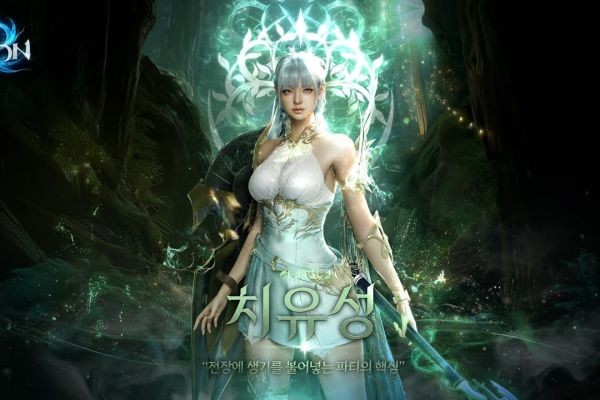
Aion 2 has entered a much more demanding stage of progression, with Chapter 1 raising the level cap to 50 and adding Eltnen, Morheim, new growth activities, additional equipment options, and a new class. As characters move beyond the earlier progression ceiling, Aion 2 Kinah [https://www.u4gm.com/aion-2/kinah] becomes one part of the preparation process, but the more interesting challenge is deciding how to turn every upgrade into an advantage during actual combat.
The current chapter changes the daily rhythm considerably. Eltnen and Morheim are not simply larger maps to run through before returning to town. They provide new progression routes, while Sealed Dungeons, Garrisons, and Monoliths add more activities for characters working toward level 50. The new Pendant equipment slot and additional high-grade Amulets and Belts also give players more reasons to examine their builds instead of focusing on a single weapon or armor upgrade.
The Brawler is another major reason to experiment. Built around Gauntlets and Rage, the class changes the tempo of close-range combat. Instead of waiting for an opponent to approach, the Brawler wants to maintain pressure and build toward stronger states. This creates an interesting contrast with ranged classes, where distance can often be part of the defensive strategy.
A good Brawler player should therefore learn enemy patterns before trying to maximize damage. Against a boss with a recognizable attack animation, there is usually a difference between a safe offensive window and a dangerous one. Entering Rampage at the wrong moment can result in losing the advantage of the class, while waiting for a predictable opening can make the same rotation much more effective.
This is also where equipment choices become more interesting. An upgrade should answer a problem. If a character is dying because of repeated mistakes during a boss mechanic, another damage increase may not solve anything. If survival is already comfortable but a group cannot finish a boss before a dangerous phase, offensive improvements may have much greater value.
The new five-player PvE structure creates plenty of situations where this philosophy matters. Chapter 1 added Citadel of the Fallen Daeva and Abyssal Horn Den, while Expedition and Transcendence content was adjusted for larger five-player groups. More players provide more possibilities for party composition, but they also mean that positioning and role coordination become increasingly important.
A balanced party can approach an encounter very differently from a damage-heavy group. A Templar or another frontline character may focus on controlling enemy attention, while ranged classes search for safer attack angles. Clerics and Chanters have to watch the overall condition of the group rather than concentrating solely on personal damage. The result is that the same equipment can have very different practical value depending on who is using it.
The current endgame also gives solo-oriented players something to work toward. Nightmare has received additional difficulty content, and Awakening-related challenges provide another environment for testing a character without relying completely on party members. Solo content is useful because it exposes weaknesses that a group can sometimes hide. A character that performs well only when several other players cover its mistakes may need a different approach to equipment and skills.
PvP creates an even sharper test. A monster follows its programmed behavior, while another player can deliberately react to a familiar rotation. A predictable opener may work repeatedly in PvE but become easy to counter in an Abyss battle. Players who enjoy both sides of the game should therefore think about movement, defensive timing, and crowd-control resistance rather than assuming that one PvE setup will automatically perform well in PvP.
The July updates also brought substantial changes to competitive content. The Abyss received new surface-layer content, while larger-scale activities added more reasons for players to think about objectives instead of simply chasing kills. In objective-based combat, a player who recognizes when to defend a location or assist a teammate can sometimes contribute more than someone focused entirely on personal damage.
Stigma progression adds another layer to this decision-making. Chapter 1 increased Stigma skill development to level 25, giving characters additional room to refine their abilities. This makes skill configuration an important partner to equipment progression. A strong item does not exist in isolation; its value depends on the rotation, role, and activity where it is being used.
Events are another reason not to make every gaming session about dungeon grinding. The Atreia Summer Festival and other seasonal activities provide alternative objectives, while attendance and growth events can help players mix progression with lighter content. The current update cycle also includes limited-time activities and cosmetic options, giving players reasons to explore systems outside their normal combat routine.
For players developing alternate characters, these events can be particularly useful. A second character does not have to follow exactly the same progression path as the main character. The Brawler, for example, can provide a completely different experience from a ranged damage class. Switching roles also helps players understand why some equipment works well in one build but feels awkward in another.
Crafting remains another useful part of long-term progression. High-level content can provide materials that become valuable beyond the immediate dungeon reward. Players who enjoy gathering resources can build toward a specific crafting target instead of depending entirely on random drops. This makes difficult content useful even on runs where the desired equipment does not appear.
The same idea applies to equipment management. Rather than replacing everything at once, players can prioritize the pieces that create the biggest improvement. A weapon may be the obvious first target for a damage dealer, while a defensive accessory or specialized piece may be more valuable for a character that already has strong offensive output.
U4GM can serve as a convenient resource option for players who want to simplify part of the preparation process. Its focus on competitive pricing and security can make resource management more convenient, while the actual gameplay remains centered on learning mechanics, coordinating with other players, exploring new areas, and developing an effective build.
The current Aion 2 environment offers plenty of ways to keep progression interesting, from the level-50 regions and Brawler combat to new dungeons, Stigma development, Abyss battles, seasonal activities, and equipment experimentation. Players who want an additional marketplace option when preparing their gear can consider Aion 2 Items for sale [https://www.u4gm.com/aion-2/items] through U4GM, while the real value of those upgrades comes from knowing when and how to use them in combat.






