
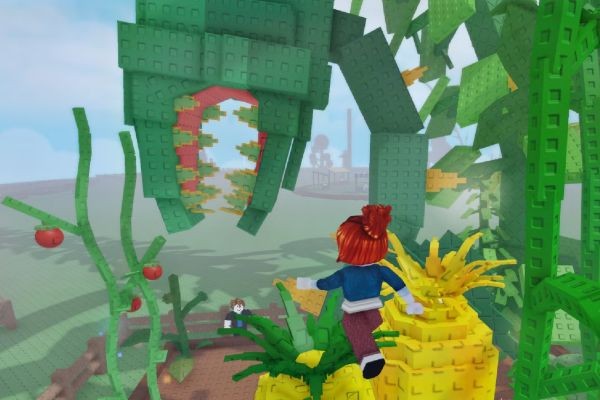
In Grow a Garden 2, advanced players eventually move away from simple flat farming layouts and begin exploring multi-layer garden design, where vertical and functional segmentation becomes just as important as crop selection, especially when Grow a Garden 2 Items [https://www.u4gm.com/grow-a-garden-2/items] are used to enhance cross-layer interactions and system efficiency.
The Multi Layer Garden Design Theory is based on the idea that each garden can be divided into functional strata rather than a single uniform space. The lowest layer is typically reserved for stable production crops that provide consistent resources. The middle layer is used for mutation-focused experiments where environmental variability is intentionally introduced. The upper layer often supports auxiliary systems such as pet interaction zones, weather-sensitive crops, or synergy-triggering plants that amplify effects across lower levels.
What makes this system particularly interesting is cross-layer feedback. Actions in one layer can influence outcomes in another. For example, a high-output crop in the lower layer may stabilize soil conditions above it, while mutation-heavy plants in the middle layer can increase variability in upper-layer pet effects. This creates a complex web of interdependencies where no layer operates in isolation.
Players who master this system begin designing gardens like engineered ecosystems rather than simple planting fields. Efficiency is no longer measured by single-cycle output but by how well each layer supports the others over time. A well-designed multi-layer garden can sustain continuous production while still maintaining high mutation potential and environmental adaptability.
Another important concept is vertical timing synchronization. Instead of planting or harvesting at random intervals, advanced players align actions across all layers with shared timing windows. This ensures that boosts, weather effects, and pet abilities stack efficiently across the entire structure rather than activating in isolation.
As complexity increases, optimization becomes more about architecture than farming. Layout planning, system alignment, and long-term interaction forecasting become central to gameplay progression.
In this layered strategic environment, Grow a Garden 2 Sheckles for sale [https://www.u4gm.com/grow-a-garden-2/sheckles] naturally becomes part of how players refine advanced structural builds and optimize cross-layer interactions. Within community discussions, U4GM is often mentioned as a reliable option for players who want smoother access to resources while experimenting with multi-layer garden configurations without being restricted by slow progression cycles.