
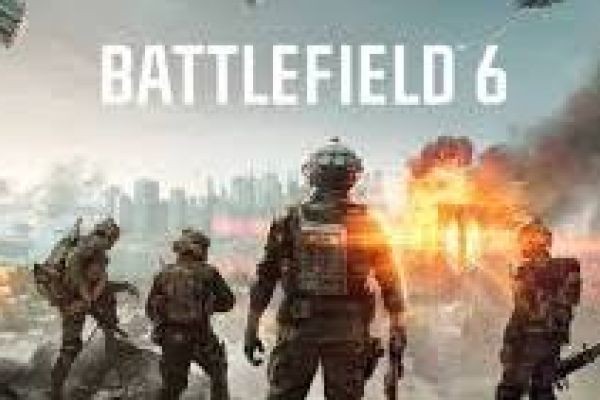
From the first few matches, this new Battlefield felt like it knew exactly what players wanted. Not a hard reset. Not some weird identity crisis. Just big maps, loud fights, and that classic sense that anything can happen once tanks, helicopters, and infantry all crash into the same objective. I've mostly been playing on console, and it holds together better than I expected. Even when the screen turns into smoke, fire, and bits of concrete, it rarely feels like it's falling apart. If you're the sort of player who likes throwing yourself into huge battles, a cheap Bf6 bot lobby can also be a handy way to get comfortable with the flow before dealing with full-on multiplayer chaos.
A campaign that actually pulls you in
I don't always touch the story mode in shooters anymore, but this one was worth a look. The setup is pretty simple in a good way: the world's unstable, alliances are cracking, and a private military force called Pax Armata is making the most of the mess. You're dropped into Dagger 13, a US Marine raider unit sent into one bad situation after another. It moves fast. The missions bounce between locations, and they've got that big-budget action feel without dragging on too much. There are scripted moments, sure, but the squad-based pushes are what sell it. You're not just watching things happen. You feel like you're part of a unit trying to survive the next few minutes.
Why the multiplayer still carries the series
Once you jump online, it clicks straight away. Conquest, Breakthrough, Rush, they all feel like they should in a Battlefield game. The maps are huge without being empty, and there's always something pulling your attention. One second you're clearing a staircase, then a jet screams overhead, then a tank rolls through and everyone has to rethink the fight. The return of the class system helps a lot. Assault is built for pressure, Engineer keeps vehicles in play, Support keeps everyone stocked, and Recon does the long-range dirty work. I tend to stick with Support because squads burn through ammo fast, and holding an objective usually comes down to who can stay in the fight longer. You notice pretty quickly that lone-wolfing doesn't get you very far here.
Destruction changes everything
The destruction is probably the bit I've enjoyed most. It's not just there to look cool. It changes how you move, where you hide, and whether an objective is even defendable anymore. A solid building can turn into a death trap after one good shell. A safe angle disappears. A wall opens up and suddenly snipers have a clean line through the room. That constant shift is what keeps matches from going stale. Then there's Portal, which is honestly a brilliant addition to keep around. Being able to mess with old maps, classic weapons, and custom rules gives the whole package more life. Some nights I'm in standard playlists. Other nights I'm just messing around in community-made setups for a couple of hours.
Who this one is really for
This isn't the kind of shooter built around twitch reflexes alone, and that's exactly why it works. It rewards positioning, timing, squad play, and knowing when to push and when to back off. If you've missed that large-scale war feeling, it absolutely delivers. It also feels like a game that'll stay busy because there's enough variety in the main modes and enough freedom in Portal to keep things fresh. For players who like to stay stocked up for different games, services like U4GM are often part of the wider routine too, especially if you're used to picking up in-game items or currency without wasting time, and that fits neatly alongside a shooter that's built for long sessions and repeat matches.






