
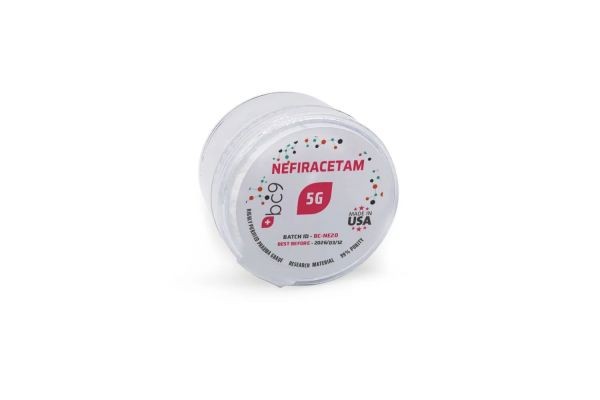
Nefiracetam is a synthetic nootropic compound belonging to the racetam family, a class widely studied for its interaction with neurotransmission and synaptic plasticity. Structurally derived from piracetam, nefiracetam is distinguished by its lipophilic properties, allowing enhanced penetration across the blood–brain barrier. This characteristic has positioned it as a compound of interest in advanced neurochemical and cognitive research.
Originally developed for neurological investigation, nefiracetam has been examined for its influence on memory pathways, cholinergic modulation, and excitatory neurotransmitter systems. Its multi-mechanistic profile differentiates it from earlier racetams, making it a focal point in experimental neuroscience.
Chemical Structure and Physicochemical Characteristics
Nefiracetam is chemically identified as N-(2,6-dimethylphenyl)-2-(2-oxo-1-pyrrolidinyl)acetamide. The presence of a substituted aromatic ring contributes to its increased lipid solubility compared to classic racetams.
Key physicochemical properties include:
- Molecular class: Racetam derivative
- Solubility: Lipophilic with improved CNS bioavailability
- Stability: Stable under standard laboratory storage conditions
- Form: Commonly encountered in analytical-grade powder for controlled research
The availability of nefiracetam powder nootropic formulations has facilitated precise dosing and standardized experimentation in laboratory settings.
Mechanisms of Action in Neurotransmission Pathways
Nefiracetam demonstrates a broad spectrum of activity across multiple neurotransmitter systems, which contributes to its complex neuropharmacological profile.
Cholinergic System Modulation
One of the primary areas of interest is nefiracetam’s interaction with acetylcholine signaling. Research models suggest enhancement of cholinergic neurotransmission through increased acetylcholine release and receptor sensitivity, particularly within cortical and hippocampal regions associated with learning and memory encoding.
Glutamatergic Receptor Interaction
Nefiracetam has been shown to modulate NMDA and AMPA receptor activity. By influencing calcium ion influx through these receptors, the compound supports synaptic plasticity mechanisms central to long-term potentiation (LTP), a foundational process in memory consolidation.
GABAergic Balance
Unlike stimulatory nootropics, nefiracetam exhibits modulatory effects on GABAergic transmission. This balancing action is associated with stabilized neuronal firing patterns, offering insight into its unique position among racetam compounds.
Cognitive Domains Explored in Research Models
Experimental studies have evaluated nefiracetam across several cognitive domains, including:
- Memory acquisition and retention
- Attention regulation
- Learning speed in task-based paradigms
- Neural adaptability under stress conditions
Animal and cellular research models indicate that nefiracetam’s multi-pathway engagement supports integrated cognitive function rather than isolated neurotransmitter stimulation.
Pharmacokinetics and Central Nervous System Distribution
Nefiracetam’s lipophilicity enables efficient absorption and rapid CNS distribution. Once administered in controlled research conditions, it demonstrates:
- Rapid blood–brain barrier penetration
- Hepatic metabolism into active and inactive metabolites
- Elimination primarily through renal pathways
These pharmacokinetic traits contribute to its consistent performance in repeat-measure laboratory studies.
Comparison With Other Racetam-Class Compounds
Within the racetam family, nefiracetam is often contrasted with piracetam, aniracetam, and oxiracetam. Its defining distinctions include:
- Broader neurotransmitter system involvement
- Enhanced lipid solubility
- Increased potency at lower experimental concentrations
These factors collectively position nefiracetam as a second-generation racetam with expanded research relevance.
Laboratory Handling and Research Formulation
Nefiracetam powder nootropic materials are typically utilized in preclinical and analytical research environments. Standard handling protocols emphasize:
- Precise microgram to milligram measurement
- Protection from moisture and excessive heat
- Documentation of batch purity and molecular verification
Such controls ensure reproducibility and data integrity across experimental models.
Neuroprotective and Synaptic Plasticity Considerations
Beyond cognitive signaling, nefiracetam has been investigated for its influence on neuronal resilience. Research data suggest involvement in pathways associated with synaptic maintenance and cellular signaling efficiency, particularly under conditions of oxidative or excitotoxic stress.
Research Significance and Ongoing Scientific Interest
Nefiracetam remains a compound of high interest within neuropharmacological research due to its multifaceted mechanism and structural advantages. Its capacity to interact with multiple neurotransmitter systems simultaneously provides a valuable model for studying integrated cognitive processes.
The continued use of nefiracetam powder nootropic compounds in laboratory environments underscores its relevance in advancing the understanding of synthetic cognitive modulators and their role in neural communication systems.






