
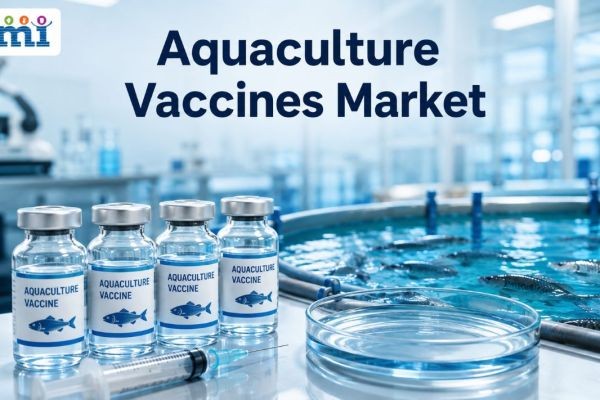
According to Future Market Insights (FMI), the global aquaculture vaccines market is expanding steadily as commercial fish producers increasingly adopt preventive immunization programs to reduce mortality, improve productivity, and comply with stricter food safety and export regulations. Vaccination is becoming an essential component of modern aquaculture, replacing reactive disease treatment with planned fish health management strategies that support sustainable production and long-term operational efficiency.
The market is projected to grow from USD 510.3 million in 2026 to USD 1,172.9 million by 2036, registering a CAGR of 8.6%. Inactivated vaccines are expected to account for 52.6% of the vaccine type segment, while salmon will represent 38.9% of total fish species demand in 2026. Commercial aquaculture farms are projected to remain the largest end users, supported by increasing vaccination programs across intensive fish farming operations.
Get Detailed Market Forecasts, Competitive Benchmarking, and Pricing Trends: https://www.futuremarketinsights.com/reports/sample/rep-gb-16501
Market Growth Path
The aquaculture vaccines market is expected to witness sustained expansion through 2036, driven by increasing disease pressure in intensive aquaculture systems and growing efforts to reduce antibiotic use across global fish farming operations. Producers are increasingly investing in preventive vaccination programs to minimize production losses, improve fish survival rates, and maintain consistent harvest quality.
Rising seafood consumption, expanding commercial aquaculture production, and stricter export quality requirements are further supporting vaccine adoption. Government initiatives promoting responsible aquaculture practices and sustainable disease management continue to encourage fish farmers to integrate vaccination into routine production protocols.
Market Overview
Aquaculture vaccines are biological products designed to protect farmed fish against bacterial, viral, and parasitic diseases that significantly affect productivity and profitability. These vaccines play a critical role in reducing disease outbreaks, lowering mortality rates, and minimizing reliance on antibiotics, thereby supporting sustainable aquaculture practices.
The market includes inactivated, live attenuated, recombinant, and DNA vaccines developed for major aquaculture species such as salmon, tilapia, carp, trout, shrimp, and other commercially farmed fish. Increasing investments in fish health management, improved vaccine delivery technologies, and pathogen-specific formulations are expanding vaccine adoption across both freshwater and marine aquaculture systems.
Key Growth Drivers
Growing global efforts to reduce antibiotic usage in food production are also accelerating vaccine demand. Regulatory authorities and seafood buyers increasingly prefer producers implementing preventive health programs that reduce antimicrobial resistance risks while ensuring compliance with food safety standards.
Export-oriented aquaculture producers are further strengthening vaccine adoption by investing in certified vaccination programs that improve product quality, traceability, and international market acceptance.
Technology & Innovation Trends
Manufacturers are investing in advanced vaccine technologies, improved adjuvant systems, and pathogen-specific formulations that enhance immune response while maintaining high safety standards. Research efforts are increasingly focused on developing thermostable vaccines that reduce cold-chain dependence and simplify transportation to remote aquaculture regions.
Innovations in oral delivery systems, immersion vaccination techniques, and automated injection technologies are improving vaccination efficiency while reducing handling stress on fish.
Market Challenges & Restraints
Despite strong long-term growth prospects, the aquaculture vaccines market faces several operational and regulatory challenges. Vaccine development requires significant investment in pathogen research, efficacy testing, and regulatory approvals, resulting in lengthy commercialization timelines.
Vaccine administration remains another challenge, particularly for small and medium-sized fish farms with limited veterinary infrastructure. Injectable vaccines require skilled handling and can increase labor costs, while maintaining cold-chain logistics in remote aquaculture regions remains difficult.
Segment Analysis
The aquaculture vaccines market is segmented by vaccine type, fish species, and end use, reflecting the industry's increasing focus on preventive fish health management and species-specific disease control.
Inactivated Vaccines Lead Market Demand
Inactivated vaccines are expected to account for 52.6% of the vaccine type segment in 2026. Their leadership is supported by proven safety, regulatory acceptance, and extensive commercial use across global aquaculture operations.
Continuous improvements in adjuvant technologies, antigen stability, and formulation techniques are strengthening immune response and expanding their application across additional fish species. As producers increasingly prioritize safe and reliable disease prevention, inactivated vaccines are expected to remain the dominant vaccine category throughout the forecast period.
Salmon Remains the Leading Fish Species
Salmon is projected to account for 38.9% of fish species demand in 2026 due to its high commercial value and intensive farming practices. Disease prevention remains essential for salmon producers, as bacterial and viral outbreaks can result in significant economic losses and reduced export competitiveness.
Growing investments in salmon aquaculture across Norway, Chile, and other major producing countries continue to strengthen demand for specialized vaccination programs. Manufacturers are expanding pathogen-specific vaccine portfolios to support improved fish survival, production efficiency, and harvest quality.
Commercial Aquaculture Farms Drive Vaccine Adoption
Commercial aquaculture farms are expected to remain the largest end users owing to large-scale production cycles and planned veterinary health programs. Intensive farming operations increasingly rely on systematic vaccination to reduce mortality, improve feed conversion efficiency, and enhance overall farm productivity.
Regional Analysis
The global aquaculture vaccines market is expanding across North America, Europe, Asia Pacific, and Latin America, supported by increasing seafood production, stricter animal health regulations, and rising investments in sustainable aquaculture.
The United States is expected to lead country-level growth with an 8.3% CAGR through 2036, followed by Chile (7.2%), Norway (6.8%), Germany (5.3%), and the United Kingdom (4.6%).
The United States continues to benefit from advanced aquaculture infrastructure, increasing investment in fish health research, and growing adoption of preventive disease management. Norway remains a major market due to its mature salmon farming industry and well-established vaccination programs. Chile continues to strengthen vaccine demand through export-focused salmon production, while Germany and the United Kingdom are witnessing steady growth supported by sustainable aquaculture initiatives, environmental regulations, and increased awareness of responsible fish health management.
Competitive Landscape
The aquaculture vaccines market remains moderately consolidated, with leading companies competing through pathogen research, product innovation, vaccine efficacy, and comprehensive fish health solutions. Key market participants include Zoetis Inc., Merck Animal Health, Elanco Animal Health, HIPRA, Benchmark Holdings, Pharmaq, Veterquimica, Pear Therapeutics, Centrovet, and Weihai Weihao Bioengineering.
Future Outlook
The aquaculture vaccines market is expected to experience robust growth through 2036 as disease prevention becomes a central component of sustainable fish farming. The market is projected to grow from USD 510.3 million in 2026 to USD 1,172.9 million by 2036, registering a CAGR of 8.6%. Inactivated vaccines, salmon vaccination programs, and commercial aquaculture farms are expected to remain the primary drivers of long-term market expansion.
Conclusion
The aquaculture vaccines market is entering a period of sustained growth as producers increasingly adopt preventive health strategies to improve productivity, reduce disease-related losses, and support sustainable seafood production. Advances in vaccine technology, stronger regulatory support, and expanding commercial aquaculture operations will continue driving demand for effective fish health solutions over the next decade.
Explore More Related Studies Published by FMI Research
https://www.openpr.com/news/4526846/3d-bio-printing-market-expands-across-usa-germany-backed
https://www.openpr.com/news/4526852/blood-coagulation-testing-and-analyzers-market-expands-across
https://www.openpr.com/news/4526856/cholangiocarcinoma-therapeutics-market-grows-across-usa
FMI Custom Research: Strategic Intelligence for Confident Decision-Making
In today's rapidly evolving business environment, leadership teams need more than market data—they need clear, actionable intelligence tailored to their strategic objectives. FMI's Custom Research solutions are designed around the specific business questions organizations need answered, enabling executives to evaluate growth opportunities, validate investments, assess competitive dynamics, and reduce uncertainty before making critical decisions.
Key Executive Benefits
- Decision-Ready Insights: Research tailored to your specific business challenges, growth plans, and investment priorities.
- Reduced Strategic Risk: Validate market opportunities, customer demand, and competitive positioning before committing resources.
- Market Entry Confidence: Assess opportunity size, regulatory barriers, channel dynamics, and competitive landscapes with precision.
- Competitive Advantage: Gain proprietary intelligence unavailable through syndicated reports or internal datasets.
- Faster Growth Decisions: Accelerate expansion, product development, portfolio optimization, and investment planning.
Business Impact
FMI helps organizations transform market complexity into strategic clarity, enabling leadership teams to identify growth opportunities faster, optimize resource allocation, strengthen competitive positioning, and make high-stakes business decisions with confidence.
To explore how FMI Custom Research can support your strategic priorities, please connect with our team at – sales@futuremarketinsights.com
About Future Market Insights (FMI)
Future Market Insights is a leading provider of market intelligence, consulting services, and syndicated research reports. FMI delivers actionable insights across food and beverage, healthcare, consumer goods, biotechnology, chemicals, industrial products, and emerging technologies, helping organizations identify growth opportunities and make informed strategic decisions in evolving global markets.
Contact Us:
Future Market Insights Inc.
Christiana Corporate, 200 Continental Drive,
Suite 401, Newark, Delaware – 19713, USA
T: +1-347-918-3531
Why FMI: https://www.futuremarketinsights.com/why-fmi
For Sales Enquiries: sales@futuremarketinsights.com
Website: https://www.futuremarketinsights.com






