
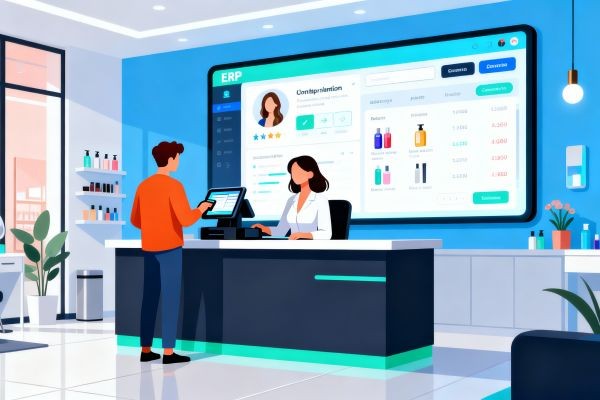
Baseer is built as a unified omnichannel retail OS for Canadian businesses, designed to keep inventory, orders, and sales synced automatically across POS, ecommerce, mobile, and warehouse operations. At the center of that automation is an ERP system that replaces guesswork with real‑time stock visibility.
Why Inventory Is So Hard Without ERP
Without ERP, each channel runs its own numbers: POS tracks in‑store sales, the ecommerce website tracks online orders, and the warehouse uses spreadsheets. This leads to:
- Different stock counts in different systems
- Poor visibility into what is available to sell
- Emergency stock transfers and last‑minute supplier calls
Global studies show that most retailers struggle with real‑time stock visibility, and those gaps directly hurt margins.
ERP as the Single Inventory Brain
An ERP system becomes the single “brain” managing inventory for your point of sale, ecommerce solutions, and warehouse. In Baseer’s model:
- Every SKU lives in one central catalog
- Every sale whether in‑store, online, or via mobile app hits the same inventory engine
- Replenishment rules and purchase orders are generated from the same data
This eliminates the need for nightly imports or manual stock adjustments across systems.
Real‑Life Example: Bakery with Retail and Online Orders
Imagine a bakery in Mississauga selling through an in‑store POS system, an ecommerce store for custom cake orders, and perhaps a marketplace listing for seasonal products. Without ERP, staff guess how many units to reserve for online orders, and daily waste or stockouts become normal.
With Baseer’s ERP‑driven stack:
- Ingredients and finished products are tracked in one system
- Online and in‑store sales share a live view of available stock
- Managers use AI‑driven forecasting to decide how much to produce for weekends and holidays
This reduces waste, improves on‑time fulfillment for ecommerce orders, and creates a more predictable operation.
Connecting Warehouse Management to Sales Channels
Warehouse management becomes far more powerful when it is part of the same ERP that powers POS and ecommerce. In Baseer:
- Picking, packing, and shipping workflows sit on top of the same inventory and order data
- Staff see where each order came from (website, marketplace, or in‑store pickup) in one interface
- Cycle counts and adjustments sync instantly to all sales channels
This is especially valuable for Canadian retailers shipping across provinces with different tax rules and logistics partners.
Auto‑Replenishment and Forecasting
ERP is not only about tracking; it is about planning. Baseer layers AI forecasting and auto‑replenishment on top of ERP data.
- The system forecasts demand for key SKUs based on history and promotions
- Purchase suggestions can be generated automatically for buyers to approve
- For perishable categories, this can directly reduce shrink and lost sales
Mid‑market grocers in Baseer’s pilot program target double‑digit reductions in shrink by acting on this data.
From Chaos to Controlled Inventory
When ecommerce, POS, and warehouse workflows share one ERP system, inventory stops being a daily crisis and becomes a controlled process. For Canadian SMBs, this is the foundation needed to confidently expand into new channels like marketplaces or dark kitchens without losing control of stock.






