
Introduction
The Vacuum Deaerators Market Barriers are closely associated with the technical, financial, and operational requirements of implementing vacuum-based dissolved-gas removal systems. Vacuum deaerators are used to remove gases such as oxygen and carbon dioxide from liquids, helping reduce corrosion risks and support stable industrial processes.
Despite their benefits, customers may face difficulties when evaluating, installing, operating, and maintaining these systems. Understanding these barriers is important for manufacturers seeking to improve product accessibility and expand adoption across industrial applications.
High Initial Investment
One of the major barriers is the upfront investment required for a complete vacuum deaeration system. The overall project can include the deaeration vessel, vacuum pumps, circulation pumps, valves, sensors, control systems, piping, installation, and commissioning.
For smaller industrial facilities, such expenditure may be difficult to justify, particularly when existing equipment continues to operate.
Manufacturers can reduce this barrier through modular configurations, scalable capacities, and flexible equipment packages.
Technical Complexity
Vacuum deaeration systems involve multiple interconnected components that must operate together effectively. Incorrect system configuration can affect vacuum stability, liquid flow, gas-removal performance, and overall reliability.
Technical complexity may increase during projects involving:
- Customized equipment
- Complex piping arrangements
- Automated control systems
- Specialized materials
- Existing plant integration
- Multiple operating conditions
Strong engineering and commissioning support can help customers overcome these difficulties.
Integration With Existing Infrastructure
Retrofitting vacuum deaerators into older industrial facilities can be challenging. Existing plants may have limited space, outdated control systems, incompatible piping, or insufficient infrastructure for new equipment.
Installation may require modifications to existing systems, increasing both project costs and downtime.
Compact equipment, modular designs, and flexible connection configurations can help suppliers address these retrofit barriers.
Maintenance Requirements
Vacuum deaerators include mechanical and control components that require regular inspection and maintenance. Vacuum pumps, valves, seals, sensors, motors, and control systems can all require servicing during the equipment lifecycle.
Maintenance activities can increase operating expenses and may require temporary shutdowns.
Manufacturers can reduce this barrier by improving component durability, simplifying maintenance access, and introducing condition-monitoring technologies.
Need for Skilled Personnel
Advanced vacuum deaeration systems can require personnel familiar with vacuum technology, pumps, instrumentation, process controls, and industrial fluid treatment.
Facilities with limited access to trained technicians may experience difficulties during installation, troubleshooting, and routine maintenance.
Training programs, intuitive control interfaces, detailed technical documentation, and remote support can help reduce the skills barrier.
Energy Consumption Concerns
Energy consumption can influence the economic attractiveness of vacuum deaeration systems. Vacuum pumps, circulation pumps, motors, and heating equipment can contribute to overall operating requirements.
Industrial users increasingly evaluate equipment based on lifecycle costs, making energy efficiency an important purchasing consideration.
Developing efficient pumps, motors, controls, and optimized operating modes can help manufacturers address this barrier.
Space Limitations
Available installation space can be a significant challenge, particularly in established manufacturing facilities.
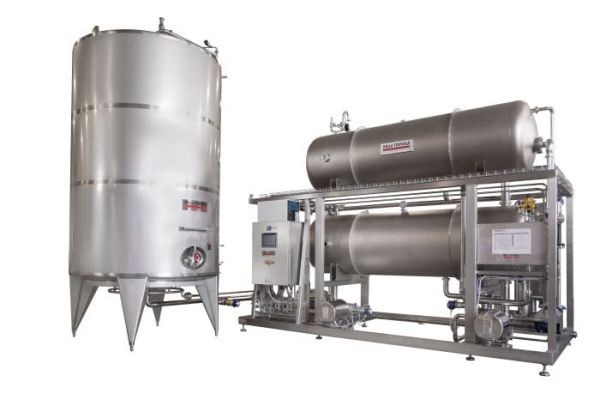
A complete system may require space for the deaerator vessel, vacuum equipment, pumps, control panels, piping, and maintenance access.
Compact and skid-mounted systems can help reduce footprint requirements and simplify installation in space-constrained facilities.
Material Compatibility
Industrial liquids can vary substantially in their chemical characteristics. Some applications may require specialized corrosion-resistant materials.
Using advanced materials can improve equipment durability, but it may also increase manufacturing costs.
Proper material selection is therefore essential for balancing equipment performance, reliability, and overall project economics.
Customization Challenges
Different industrial applications often require different equipment configurations. Capacity, liquid composition, temperature, pressure, vacuum requirements, and automation levels can vary from one facility to another.
While customization improves application suitability, it can also increase engineering time, manufacturing complexity, and project costs.
Manufacturers need to balance customized solutions with standardized components wherever practical.
Supply-Chain Constraints
Vacuum deaeration systems rely on components such as pumps, valves, sensors, motors, electronic controls, and specialized materials.
Delays in obtaining critical components can affect production schedules and project delivery.
Supply-chain disruptions can also increase equipment costs and make project timelines less predictable.
Manufacturers can address this barrier through diversified sourcing, stronger supplier relationships, and strategic inventory planning.
Competition From Alternative Technologies
Industrial customers may evaluate vacuum deaeration alongside other approaches to dissolved-gas management.
Technology selection can depend on:
- Installation cost
- Energy requirements
- Process suitability
- Maintenance needs
- Available space
- Desired performance
- Long-term operating costs
Vacuum deaerator manufacturers therefore need to clearly demonstrate the benefits and application suitability of their systems.
Limited Awareness in Emerging Applications
Some industries may have limited familiarity with vacuum deaeration technology, particularly where alternative treatment methods are already established.
Lack of technical awareness can slow adoption and make customers reluctant to invest in unfamiliar equipment.
Manufacturers can address this through technical education, application demonstrations, operator training, and stronger customer support.
Digitalization Barriers
Smart vacuum deaerators can provide monitoring and connectivity features, but implementing these technologies can create additional requirements.
Facilities may need suitable communication networks, compatible control platforms, cybersecurity measures, and trained personnel.
For some customers, these additional requirements can make advanced equipment appear more complicated than conventional systems.
Compliance and Application Requirements
Certain industries have specific requirements concerning equipment materials, safety, hygiene, pressure handling, and process control.
Meeting these requirements can increase engineering, documentation, testing, and certification responsibilities.
This can create additional barriers for manufacturers entering specialized markets such as pharmaceutical, food-processing, and other highly controlled environments.
Strategies to Reduce Market Barriers
Manufacturers can improve adoption by focusing on practical solutions such as:
- Modular equipment configurations
- Energy-efficient components
- Simplified controls
- Compact designs
- Remote technical assistance
- Predictive maintenance
- Operator training
- Flexible customization
- Strong spare-parts support
These measures can reduce the technical and operational burden for customers.
Future Perspective
The barriers affecting the Vacuum Deaerators Market are also creating opportunities for innovation. Manufacturers that develop simpler, more efficient, connected, and adaptable systems can address several adoption challenges simultaneously.
Improved automation can reduce dependence on skilled operators, while predictive monitoring can reduce maintenance concerns. Modular systems can simplify installation, and energy-efficient components can improve lifecycle economics.
Conclusion
The Vacuum Deaerators Market faces barriers related to capital investment, technical complexity, infrastructure integration, maintenance, skilled personnel, energy consumption, space requirements, material compatibility, supply chains, and competition from alternative technologies.
However, these barriers can be addressed through product innovation and customer-focused solutions. Energy-efficient equipment, modular configurations, automated controls, digital monitoring, customized engineering, and comprehensive technical support can make vacuum deaeration systems more accessible and practical for industrial users.






