
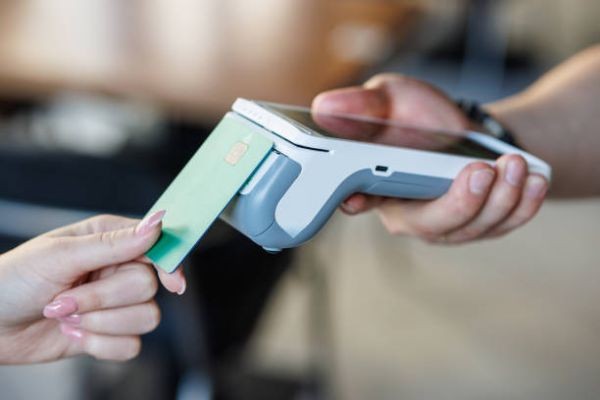
Imagine handing someone your business card at a networking event, and with a single tap, they instantly have your contact information, LinkedIn profile, and website on their phone. Pretty futuristic, right? That's the magic of NFC business cards — and millions of professionals are switching to them.
But here's the thing: that same tap-to-transfer convenience that makes NFC cards so appealing can also open the door to some genuinely concerning security vulnerabilities. Before you ditch your paper cards for a shiny smart card, it's worth asking — just how safe are these little digital powerhouses?
In this article, we'll break down the biggest security risks of NFC business cards, explain how they work, and share practical steps to protect yourself. Whether you're a solo entrepreneur, a sales professional, or an IT manager considering rolling them out across your team, this guide is for you.
What Is an NFC Business Card and How Does It Work?
NFC stands for Near Field Communication, a short-range wireless technology that allows two devices to exchange data when held within a few centimeters of each other. NFC business cards contain a tiny embedded chip — typically an NTAG213 or NTAG216 chip — and a small antenna loop. When someone taps the card with an NFC-enabled smartphone, the phone reads the chip's data and can open a URL, download a vCard contact file, or even launch an app.
Unlike Bluetooth, NFC requires close physical proximity, which is often marketed as a security advantage. However, as we'll explore, proximity alone isn't a watertight security barrier. The technology powering products from brands like Popl, Mobilo, Linq, and V1CE is convenient and eco-friendly, but it comes with trade-offs that every user should understand.
Data Interception and Eavesdropping
One of the most discussed NFC security risks is data interception. When an NFC chip transmits data, it creates a small electromagnetic field. In theory, a sophisticated attacker using specialized hardware — sometimes called an NFC eavesdropping device or a long-range NFC reader — could potentially capture that transmission from a slightly greater distance than expected.
The catch? Standard NFC operates at 13.56 MHz and has a typical range of under 10 cm. But research from security institutions like the University of Surrey has shown that under optimal conditions, passive eavesdropping is possible up to about 1 meter away. While this is rare in everyday environments, it's a real risk at crowded events like trade shows or conferences — exactly where business cards are exchanged most often.
Data Manipulation and Man-in-the-Middle Attacks
A more sophisticated threat is a man-in-the-middle (MitM) attack. In this scenario, an attacker intercepts the communication between your NFC card and a recipient's device, potentially altering the data being transmitted. For example, they could change the URL your card sends to a recipient's phone — redirecting them to a phishing site instead of your legitimate portfolio or LinkedIn profile.
This is especially concerning because most NFC business cards are not write-protected by default. Without locking the chip, anyone with an NFC-capable device and a free app like NFC Tools can overwrite the data stored on your card. Imagine a competitor or bad actor quietly rewriting the card's URL while sitting next to you at a conference. Your brand-new smart card suddenly becomes a vehicle for spreading malware or phishing links.
Malicious URL Redirection and Phishing
Phishing attacks are among the most common cybersecurity threats globally, and NFC business cards can become an unwitting tool for spreading them. When a recipient taps your card, their phone is essentially being told to visit a URL automatically. If that URL has been altered — either by tampering with your card or by compromising the platform hosting your digital profile — the recipient could land on a convincing fake website designed to steal login credentials or install spyware.
Platforms like Popl and Mobilo use centralized cloud dashboards to manage your card's linked content. While convenient, this creates a single point of failure. If your account credentials are stolen through a credential stuffing attack or a weak password, a cybercriminal could silently redirect all your card's traffic to a malicious domain without ever touching the physical card.
Oversharing Sensitive Personal Information
Many professionals load their NFC cards with far more information than they realize. In a rush to make a strong impression, people link their cards to personal social media profiles, home addresses, phone numbers, and even payment apps like PayPal or Venmo. This over-disclosure creates a privacy risk that goes far beyond traditional paper business cards.
The issue isn't just about hackers — it's also about data aggregation. A person who taps your card can store your full digital profile indefinitely, combining your contact info with publicly available data from LinkedIn, Instagram, and other platforms to build a surprisingly detailed picture of who you are. For executives, journalists, or anyone concerned about stalking or identity theft, this level of information exposure deserves serious thought before sharing.
Lost or Stolen Cards and Unauthorized Access
One often-overlooked risk is straightforward: what happens if your NFC business card is lost or stolen? Unlike a paper card, a smart NFC card may be linked to a live digital profile with real-time content — including your personal website, booking calendar, email, and social accounts. Anyone who picks up your lost card effectively has an open door to all of that.
Some premium NFC card providers offer the ability to remotely deactivate or update the linked profile, which is a significant security advantage. However, not all platforms provide this feature, and many users never set it up proactively. Without remote deactivation, a lost NFC card remains an active security vulnerability until you manually change the URL it links to — if the platform even allows it.
Relay Attacks and NFC Spoofing
Relay attacks are a more advanced threat that security researchers have demonstrated in controlled environments. In a relay attack, two devices work together to extend the effective range of an NFC interaction: one device near the legitimate card relays signals to a second device near the target phone. This can make it appear as though a valid card is being tapped when it's actually a fraudulent relay.
NFC spoofing is related — an attacker programs their own device to mimic the data signature of your card. While these attacks require technical sophistication and specialized equipment, they're not purely theoretical. Security firm Symantec and academic groups at ETH Zurich have documented relay-based vulnerabilities in contactless payment systems, and the same principles apply to contactless data cards. As NFC technology becomes more widespread, the incentive to develop these tools grows.
Platform Vulnerabilities and Third-Party Risks
Most NFC business card ecosystems depend heavily on third-party cloud platforms to host your digital profile. When you tap your Mobilo or Linq card, the phone visits a URL hosted on that company's servers. This means your security is only as strong as that platform's security practices — and that's a dependency many users never consider.
Data breaches at SaaS companies are common. If an NFC card platform suffers a breach, user profile data — including contact details, linked social accounts, and behavioral analytics — could be exposed. Furthermore, some platforms share anonymized usage data with advertising networks, meaning the taps your card receives may feed into marketing databases. Reading the privacy policy and terms of service for your chosen NFC card provider is not just recommended — it's essential.
How to Protect Yourself When Using NFC Business Cards
The good news is that most of these risks are manageable with a few smart precautions. Start by write-locking your NFC chip after programming it. Most chips can be permanently locked using an app like NFC Tools on Android, which prevents anyone from overwriting the data. If you're using a managed platform, enable two-factor authentication (2FA) on your account immediately.
Be intentional about what information you link to your card. Stick to professional-only profiles, and avoid connecting personal social media, home addresses, or payment platforms. Choose NFC card providers that offer HTTPS-secured URLs, remote card deactivation, and transparent privacy policies. Regularly audit what your card links to, and rotate your profile URL if you suspect the card has been tampered with. Treat your NFC card with the same security mindset you'd apply to any connected device.
The Bottom Line
NFC business cards represent a genuine leap forward in professional networking. They're eco-friendly, endlessly customizable, and genuinely impressive to receive. But like any technology that combines convenience with connectivity, they come with a real set of security risks that shouldn't be ignored.
Data interception, phishing redirection, unauthorized overwrites, platform vulnerabilities, and information oversharing are all legitimate concerns. The professionals who benefit most from NFC cards are those who understand the risks, take proactive steps to mitigate them, and stay informed as the technology evolves. A smart card is only as smart as the person using it.
Frequently Asked Questions
Can someone hack my NFC business card from a distance?
Technically, NFC signals can be intercepted from slightly beyond the standard 10 cm range using specialized equipment, but this requires deliberate effort and hardware. In practical everyday settings, this risk is low. The more realistic threat is someone physically overwriting your card's data if it hasn't been write-locked.
How do I prevent someone from overwriting my NFC card?
You can lock most NFC chips using a free app like NFC Tools (available on Android). Once locked, the chip becomes read-only and cannot be reprogrammed. Note that locking is usually permanent — you won't be able to update the chip afterward, so make sure your linked URL is final before locking it.
Are NFC business cards safer than QR codes?
Both have comparable risks. QR codes can be physically covered or replaced with malicious ones. NFC cards can be digitally overwritten if unprotected. NFC has a slight edge in that it's harder to visually swap unnoticed, but write-protection is still essential. Using HTTPS URLs with both technologies reduces the risk of redirection attacks.
What information should I NOT put on my NFC business card?
Avoid linking to personal social media profiles, home addresses, personal phone numbers, or payment platforms like Venmo or PayPal. Stick to professional content: a business website, LinkedIn profile, professional email, and a digital portfolio. The less personal data you expose, the lower your privacy risk.
What happens if I lose my NFC business card?
If your NFC card is linked to a managed platform like Popl, Mobilo, or Linq, you may be able to remotely deactivate or redirect the card through your account dashboard. If your card is self-programmed with a hardcoded URL and no management platform, change the destination URL immediately on your website or hosting provider, and consider updating any linked accounts.
Are NFC business cards safe for corporate or enterprise use?
They can be, with the right safeguards. Enterprises should evaluate the security practices of any NFC card platform before rollout, ensure all cards are write-locked, enforce 2FA on platform accounts, avoid linking to sensitive internal systems, and include NFC card policies in their overall cybersecurity framework. IT teams should also periodically audit what data cards are broadcasting.






