
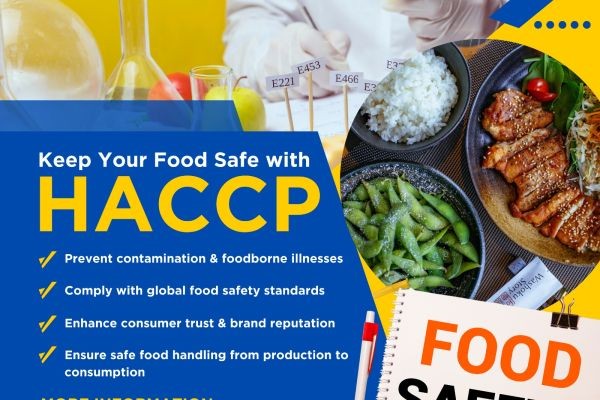
Food safety is a critical concern for businesses operating in the food production, processing, storage, and distribution sectors. Consumers expect safe, high-quality food products, and regulatory authorities require organizations to implement effective food safety management systems. One of the most widely recognized approaches to food safety is Hazard Analysis and Critical Control Points (HACCP).
HACCP is a preventive system designed to identify, evaluate, and control food safety hazards before they affect consumers. Organizations seeking to improve food safety compliance often work with HACCP Certification Consultants in Singapore to establish and maintain effective HACCP programs that meet international standards and regulatory requirements.
Understanding HACCP
HACCP stands for Hazard Analysis and Critical Control Points. It is a systematic approach that focuses on preventing biological, chemical, and physical hazards throughout the food production process rather than relying solely on end-product testing.
The HACCP methodology is recognized globally and is used by food manufacturers, restaurants, catering companies, food packaging organizations, and logistics providers to ensure food safety and quality.
Why Is HACCP Important?
Implementing HACCP helps organizations:
- Improve food safety management
- Reduce the risk of food contamination
- Meet regulatory and legal requirements
- Increase customer confidence
- Enhance operational efficiency
- Minimize product recalls and food safety incidents
- Support international trade opportunities
Many businesses engage HACCP Consultants Services in Singapore to guide them through hazard identification, risk assessment, documentation, and certification processes.
The Seven Key Principles of HACCP
The HACCP system is built around seven fundamental principles that provide a structured framework for controlling food safety hazards.
1. Conduct a Hazard Analysis
The first principle involves identifying potential hazards that could occur at every stage of food production and handling.
These hazards may include:
Biological Hazards
- Bacteria
- Viruses
- Parasites
- Fungi
Chemical Hazards
- Cleaning agents
- Pesticides
- Food additives
- Allergens
Physical Hazards
- Metal fragments
- Glass pieces
- Plastic particles
- Stones
Organizations must evaluate the likelihood and severity of each hazard to determine which ones require control measures.
2. Determine Critical Control Points (CCPs)
A Critical Control Point (CCP) is a stage in the process where control can be applied to prevent, eliminate, or reduce a food safety hazard to an acceptable level.
Examples of CCPs include:
- Cooking temperatures
- Refrigeration processes
- Metal detection systems
- Pasteurization procedures
Identifying CCPs ensures that critical food safety risks are effectively managed before products reach consumers.
3. Establish Critical Limits
For each CCP, organizations must establish measurable critical limits that separate safe conditions from unsafe conditions.
Examples include:
- Minimum cooking temperature requirements
- Maximum storage temperatures
- Acceptable pH levels
- Moisture content limits
These limits provide clear standards that help ensure food safety objectives are consistently achieved.
4. Establish Monitoring Procedures
Monitoring activities ensure that each CCP remains within the established critical limits.
Monitoring methods may include:
- Temperature checks
- Visual inspections
- Laboratory testing
- Equipment calibration
- Automated monitoring systems
Regular monitoring allows organizations to identify deviations quickly and take immediate corrective action.
5. Establish Corrective Actions
When monitoring indicates that a critical limit has been exceeded, corrective actions must be implemented.
Corrective actions typically involve:
- Isolating affected products
- Investigating the root cause
- Adjusting process controls
- Reprocessing or disposing of products when necessary
- Documenting corrective measures
Effective corrective actions help prevent unsafe food from entering the market.
6. Establish Verification Procedures
Verification activities confirm that the HACCP system is functioning effectively and achieving its intended food safety objectives.
Verification methods include:
- Internal audits
- Product testing
- Record reviews
- Equipment inspections
- Management reviews
Verification provides confidence that food safety controls remain effective over time.
7. Establish Documentation and Record Keeping
Proper documentation is essential for demonstrating HACCP compliance and maintaining traceability.
Important records may include:
- Hazard analysis reports
- CCP monitoring logs
- Corrective action records
- Verification reports
- Training records
- Audit findings
Comprehensive documentation supports regulatory inspections and certification audits.
Benefits of HACCP Certification
Organizations that achieve HACCP certification gain several advantages, including:
- Stronger food safety culture
- Improved regulatory compliance
- Enhanced brand reputation
- Greater customer trust
- Reduced operational risks
- Increased market competitiveness
Working with experienced HACCP Certification Consultants in Singapore can simplify the certification journey and help organizations achieve compliance efficiently.
HACCP Implementation in Singapore
Singapore's food industry operates under strict food safety regulations, making HACCP implementation highly valuable for businesses seeking to maintain compliance and customer confidence.
Professional HACCP Consultants Services in Singapore assist organizations by:
- Conducting gap assessments
- Performing hazard analyses
- Developing HACCP plans
- Training employees
- Preparing documentation
- Supporting certification audits
These services help businesses establish a robust food safety management framework that aligns with industry best practices.
Understanding HACCP Cost in Singapore
The HACCP Cost in Singapore varies depending on several factors, including:
- Organization size
- Number of operational locations
- Complexity of food processes
- Existing food safety controls
- Employee training requirements
- Certification body fees
- Consultancy support requirements
Although certification requires an investment, the long-term benefits often outweigh the costs by reducing food safety risks, improving operational efficiency, and strengthening customer trust.
Conclusion
HACCP is a globally recognized food safety management system built on seven essential principles: hazard analysis, critical control point identification, critical limits, monitoring, corrective actions, verification, and documentation. Together, these principles help organizations proactively prevent food safety hazards and ensure the delivery of safe, high-quality food products.
Businesses looking to enhance food safety performance and achieve certification can benefit from partnering with experienced HACCP Certification Consultants in Singapore. Professional HACCP Consultants Services in Singapore provide expert guidance throughout implementation and certification, helping organizations manage compliance requirements effectively while optimizing their HACCP Cost in Singapore investment.






