
Have you ever slipped on a wet floor and wondered who should pay for the harm it caused? Slip accidents happen fast, but the proof you collect afterward can shape everything. The right evidence shows what went wrong and who was responsible. Without it, even a clear case can fall apart.
This guide explains what helps most. If you are exploring Personal Injury Claims Manchester [https://evoquemedical.co.uk/] or anywhere else in the UK, the steps below apply in the same way. Good evidence is the backbone of any successful injury claim, and gathering it early gives you the best chance of a fair outcome.
Why Evidence Matters
The burden of proof sits with you, not the other side. That feels unfair when you are the one who got hurt, but it is how the law works. The person or business you are claiming against will try to show the accident was not their fault. Strong evidence answers that challenge before it is even raised. Think of each piece of proof as a brick. One brick is weak. A wall of bricks is hard to knock down. A well-built injury claim rests on several types of evidence that support each other.
Key Evidence to Gather
Medical Records
See a doctor as soon as you can, even if the pain seems minor. Medical notes record what you injured and how bad it was. These records link your harm to the accident and become central to any injury claim. Soft tissue damage can be hard to prove, so a professional assessment really matters.
Photos and Video
A clear photo of the hazard speaks louder than words. Capture the wet floor, the missing warning sign, the broken step, or the raised pavement. Take pictures of your injuries too, and again as they heal. If CCTV recorded the moment, request that footage quickly before it gets deleted.
Accident Book Reports
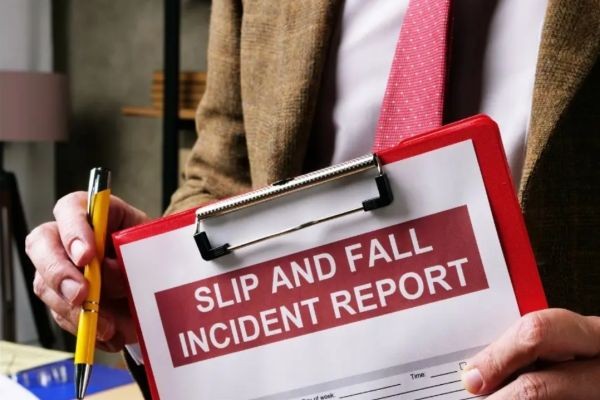
Most shops and workplaces keep an accident book. Report what happened and ask for a copy. By law, businesses with ten or more employees must keep one. This written record fixes the date, time, and details in place, which is powerful support for your injury claim.
Witness Details
Did anyone see you fall? Their account can confirm your version of events. Get names and phone numbers at the scene, because people are far harder to track down later.
Proving Who Is at Fault
Evidence does two jobs. It proves your harm, and it proves liability. To show fault, your solicitor may also request cleaning logs, maintenance schedules, and records of past accidents in the same spot. Was anyone else hurt there last winter? Had a hazard been reported and ignored? Answers like these turn a shaky case into a strong injury claim. Keep your receipts too. Lost wages, prescriptions, travel costs, and care expenses all count toward what you can recover.
What the Data Shows
Slip accidents are far more common than people think. According to Health and Safety Executive figures for 2024 to 2025, slips, trips, and falls on the same level made up 30 percent of all reported non-fatal injuries to employees, with 18,051 cases logged that year. The wider Labour Force Survey suggests around 133,000 workers suffer this kind of harm each year on average. These numbers show why courts take such accidents seriously, and why solid proof is expected to back up every injury claim.
Acting Within Time Limits
Time is not on your side. In most cases you have three years from the date of the accident to start a case, under the Limitation Act 1980. Waiting also lets evidence fade. CCTV gets wiped, memories blur, and hazards get fixed. The sooner you act, the stronger your position.
One more point worth knowing. Compensation guidance shifted recently. The 17th edition of the Judicial College Guidelines, published in April 2024, raised award figures by around 22 percent across injury categories to reflect inflation. That makes accurate medical evidence even more valuable when you are valuing your injury claim.
Final Words
So what really helps after a slip? Quick medical care, clear photos, a logged accident report, honest witnesses, and proof of your costs. Together they tell a full picture of what happened and who was at fault. The law puts the weight on you, but the right evidence carries that load. Collect it early, keep it safe, and you give yourself the best shot at a fair result. This article shares general information and is not legal advice, so speak with a qualified solicitor about your own situation.
Visit mabiab for more informative blogs.






