
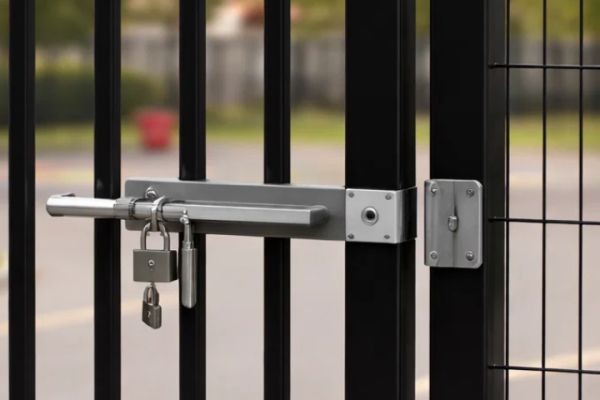
Security fencing for commercial and government sites requires access control hardware that can withstand frequent use, weather exposure and demanding security conditions. A Broadhurst lock is one type of gate locking mechanism that can be considered for controlled access points, particularly where robust gate security is required. Understanding how these locks work and where they are suitable can help project managers, contractors and facility operators make informed decisions when planning security fencing systems.
What Is a Lock Used for Security Fencing?
A gate lock is designed to keep a secured entrance closed until authorised access is required. Unlike basic locking arrangements, security gate hardware must often cope with high traffic volumes and repeated opening and closing.
Commercial and government facilities may require locks that work with different access control arrangements. These can include manually operated gates, coded access systems, electronic controls and security personnel.
For larger projects, the selected locking system should match the gate's construction, usage frequency and required security level.
Where Are These Locks Commonly Used?
Government Infrastructure
Government infrastructure sites often have restricted areas containing equipment, records, vehicles or other sensitive assets. Security fencing combined with suitable gate hardware can help control movement between public and restricted areas.
Gates may be positioned around utility infrastructure, transport facilities, government compounds and operational sites where unauthorised access needs to be restricted.
Construction and Development Sites
Construction sites can contain machinery, materials and temporary infrastructure that require controlled access. A suitable locking arrangement on a sliding gate can help manage entry and exit points during different stages of a project.
The hardware should be selected according to the gate's weight, operating frequency and environmental conditions.
Logistics and Industrial Facilities
Warehouses, distribution centres and logistics facilities often experience significant vehicle movements throughout the day. Their security gates need to remain reliable despite frequent operation.
A properly selected locking mechanism can form part of a broader access management system, helping separate loading areas, storage zones, staff access points and restricted operational areas.
Education Infrastructure
Schools, colleges and other educational facilities may use security fencing to separate operational areas, vehicle zones, maintenance areas and restricted infrastructure.
Gate hardware needs to provide dependable access control while allowing authorised personnel to operate entrances efficiently.
How Does a Sliding Gate Affect Lock Selection?
A sliding gate operates differently from a hinged gate because it moves horizontally along a track or support system. This means the locking mechanism needs to be compatible with the gate's movement and frame configuration.
Before selecting hardware, project teams should consider:
-
Gate dimensions and weight
-
Frequency of operation
-
Available locking points
-
Required level of access control
-
Exposure to rain, dust and other environmental conditions
-
Compatibility with existing security equipment
-
Maintenance requirements
Correct compatibility is particularly important on large commercial and government fencing projects where replacing unsuitable hardware can create additional costs and operational disruption.
What Should Project Managers Consider?
Security fencing should be planned as a complete system rather than as individual components. The gate, frame, hinges or tracks, locking hardware and access control arrangements should work together.
For example, a high security fence may provide strong perimeter protection, but an unsuitable gate lock could become a weak point. Similarly, a heavily used entrance requires hardware capable of handling its expected operating conditions.
Maintenance should also be considered during the planning stage. Regular inspections can identify loose components, corrosion, alignment problems or other issues before they affect gate operation.
Frequently Asked Questions
1. What is the purpose of a Broadhurst lock?
It is a type of gate locking mechanism used to help secure controlled access points within fencing systems.
2. Can a sliding gate use specialised locking hardware?
Yes. A sliding gate can require locking hardware designed specifically for its horizontal movement and frame configuration.
3. Where is a Broadhurst lock commonly considered?
It may be considered for commercial, industrial, construction, education and government fencing applications where controlled access is required.
4. What should be checked before installing a sliding gate lock?
Gate weight, dimensions, operating frequency, frame configuration, access requirements and environmental exposure should all be assessed.
5. Why is gate hardware important for security fencing?
Gate hardware can influence the reliability and security of an access point, making appropriate selection important for larger commercial and government fencing projects.






