
It was a gift, one of those beginner sets with a pre-stamped snowflake, a small bundle of colored thread, and instructions written for someone who had genuinely never held an embroidery needle before — which was accurate, because I hadn't.
The first hour was clumsy. My tension was uneven; the thread kept knotting on itself, and the backstitch I was supposed to follow wandered a little farther off the printed line every few stitches. But somewhere around the second evening, something shifted. My hands stopped fighting the needle. The stitches started landing where I wanted them. By the time the snowflake was finished, it wasn't perfect, but it was mine, and I remember being surprised at how proud I felt of something so small.
That would have been a perfectly reasonable place to stop. Plenty of people finish one seasonal kit, hang the ornament, and move on with their year. I didn't, though — not because I had some bigger plan, but because I kept thinking about what else those same stitches could make.
The Practice Phase
For a few weeks after that first ornament, I didn't attempt anything ambitious. I just repeated the basics — running stitch, satin stitch, the occasional French knot — on scraps of leftover fabric, mostly because it was calming and I liked watching my consistency improve. I picked up a free downloadable pattern for a small wreath and stitched it in three different colorways just to see how the same shape changed personality with different thread choices. None of this was necessary. It just felt good to keep going.
The First Original Design
Eventually I got curious about stitching something that wasn't handed to me pre-printed. I sketched a small shape — nothing complicated, just an outline of my dog's silhouette — and transferred it onto fabric using a lightbox, the same way the factory-stamped kits are made, just done by hand at my kitchen table instead. Stitching my own design for the first time felt different from following a kit. There was no printed line telling me exactly where to go, so every decision about shape and shading was mine. It took longer, and it wasn't as clean as the kit projects, but I liked it more.
Where It Started to Change Shape
A few people saw that finished piece and asked if I could make one for them too. I said yes without really thinking it through, then quickly realized hand-stitching the same design five separate times was a very different experience from stitching it once for myself. It wasn't relaxing anymore. It was repetitive in a way that started to feel like a chore rather than a hobby.
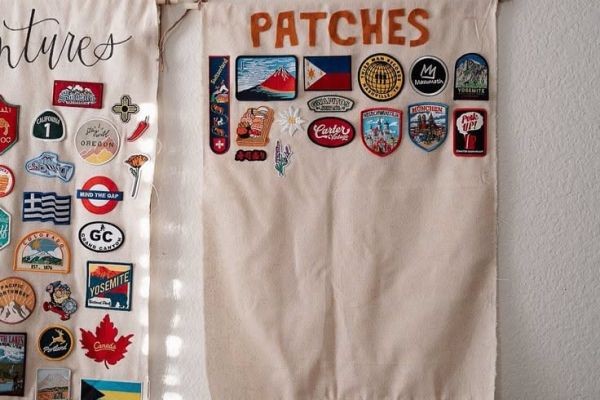
That's when I started looking into have patches made professionally instead of continuing to hand-stitch each one. I sent over a photo of my original piece, and a manufacturer digitized it into a proper embroidery file same outline, same colors, same general character — but produced consistently and at a size that actually worked for sewing onto a jacket rather than framing on a wall.
What Surprised Me About Making the Switch
The finished patches looked fuller than my hand-stitched original, simply because machine embroidery packs in a much higher stitch density than I could ever manage by hand. I half-expected to feel like something was lost in the translation, but it mostly wasn't — the design was still recognizably mine, just executed with more precision and consistency than five rounds of hand-stitching would have given me anyway.
Before committing to the full order, I spent some time trying to find a good custom patch company whose sample photos actually matched what they delivered, rather than judging purely off a mockup. That one step probably saved me from a disappointing first order seeing real stitched samples told me more about quality than any product description could.
The Part Nobody Tells You
None of this makes the hobby less worth doing on its own terms. I still stitch an ornament most Decembers, purely because it's quiet and satisfying and doesn't need to lead anywhere. But I also know now that if a design I make ever turns into something more than just a hand-stitching project, it doesn't have to stay a hand-stitching project forever. That first clumsy snowflake really was just the beginning, even though I didn't know it at the time.






