
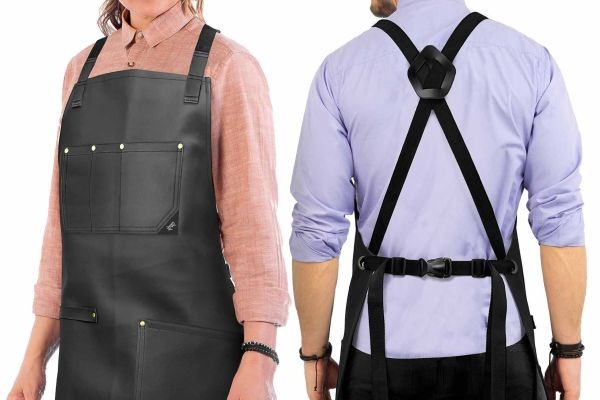
Choosing the right leather is the most important factor when creating a high-quality Handmade leather apron. The type of leather determines not only the apron’s durability and protection but also its comfort, appearance, and lifespan. Whether the apron is designed for woodworking, welding, cooking, or crafting, selecting the best leather ensures long-term performance and professional results.
Full-Grain Leather: The Best Choice for Handmade Leather Aprons
Full-grain leather is widely considered the best leather for handmade leather aprons. It is the highest quality leather available, made from the top layer of the hide without sanding or buffing. This leather retains its natural grain, making it extremely strong, breathable, and resistant to wear. Full-grain leather aprons develop a beautiful patina over time, adding character while maintaining durability, which makes them ideal for professionals and heavy-duty use.
Top-Grain Leather: A Balanced Option
Top-grain leather is another excellent choice for handmade leather aprons, especially for users who want durability with a slightly softer feel. It is lightly sanded to remove imperfections, giving it a smoother and more uniform appearance. While slightly less durable than full-grain leather, top-grain leather is more flexible and comfortable, making it suitable for chefs, baristas, and light workshop use.
Split Leather: Affordable but Less Durable
Split leather is made from the lower layers of the hide and is often used for budget-friendly leather aprons. While it still offers some protection, it lacks the strength and longevity of full-grain or top-grain leather. Split leather aprons are best suited for light tasks or occasional use rather than demanding professional environments.
Vegetable-Tanned Leather vs Chrome-Tanned Leather
Vegetable-tanned leather is highly recommended for handmade leather aprons because it is eco-friendly, firm, and ages beautifully. It provides excellent protection and structure, making it ideal for workshops and craftsmanship. Chrome-tanned leather, on the other hand, is softer and more flexible but less heat-resistant, making it better for casual or fashion-focused aprons rather than industrial use.
Thickness Matters for Performance
The thickness of the leather is just as important as the type. For heavy-duty handmade leather aprons, leather between 1.5 mm to 2.5 mm thick provides the best balance of protection and comfort. Thicker leather offers better resistance to heat, sparks, and sharp tools, while thinner leather improves flexibility for long working hours.
Final Thoughts: Best Leather for Handmade Leather Aprons
For the highest quality and longest-lasting handmade leather apron, full-grain, vegetable-tanned leather is the best choice. It offers superior durability, natural beauty, and excellent protection across multiple professions. Top-grain leather is a strong alternative for those seeking comfort and style, while split leather is best reserved for light or occasional use. Choosing the right leather ensures that your handmade leather apron not only performs well but also stands the test of time.






