
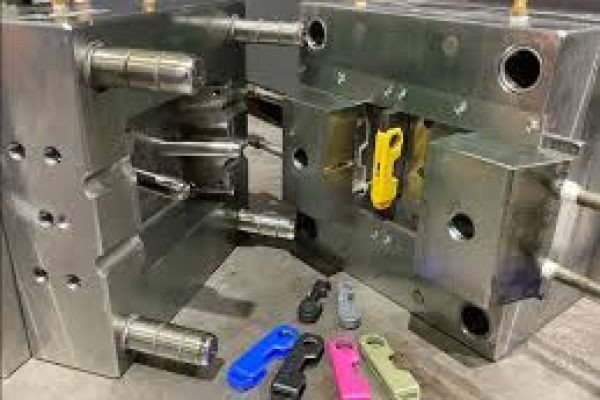
Injection mold tooling is a core manufacturing process used to produce large quantities of identical plastic parts with high precision. It involves creating a custom mold, which is then used to inject molten material—usually plastic—into a shaped cavity where it cools and solidifies into the final product. This process is widely used in industries such as automotive, medical devices, electronics, and consumer goods because of its reliability and efficiency.
In mass production, injection mold tooling plays a foundational role by ensuring every part produced meets exact design specifications. Once the mold is developed, it can be reused thousands or even millions of times, making it highly suitable for large-scale production demands.
Key points:
- Enables high-volume manufacturing with consistent output
- Reduces human error in production processes
- Produces complex shapes with high accuracy
- Supports a wide range of industrial applications
- Provides long-term manufacturing stability
Precision and Consistency in Production Quality
One of the biggest advantages of injection mold tooling is its ability to deliver exceptional precision and consistency. Each molded part is produced using the same cavity, which ensures uniformity across thousands of units. This level of accuracy is critical in industries like aerospace, healthcare, and automotive, where even small variations can lead to performance issues.
With modern engineering and advanced tooling design, manufacturers can achieve extremely tight tolerances. This means products not only look identical but also function identically, which is essential for brand reliability and customer satisfaction.
Key points:
- Ensures identical product replication across batches
- Maintains tight dimensional tolerances
- Reduces defects and quality variations
- Enhances product reliability and performance
- Strengthens brand trust through consistent output
Cost Efficiency and Long-Term Savings
Although the initial investment in injection mold tooling can be high, it becomes extremely cost-effective over time. Once the mold is created, the cost per unit decreases significantly as production volume increases. This makes it one of the most economical manufacturing methods for large-scale production runs.
Additionally, the automation involved in injection molding reduces labor costs and material waste. The process is highly optimized, meaning manufacturers can produce more units in less time with minimal operational expenses.
Key points:
- Reduces cost per unit in high-volume production
- Minimizes material waste during manufacturing
- Lowers labor dependency through automation
- Offers high return on investment over time
- Suitable for long production cycles
Material Flexibility and Complex Product Design
Injection mold tooling supports a wide variety of materials, including thermoplastics, thermosets, and specialized polymers. This flexibility allows manufacturers to choose materials based on strength, durability, heat resistance, or flexibility depending on product requirements. As a result, it is widely used across multiple industries with different performance needs.
Another major advantage is the ability to create highly complex designs that would be difficult or impossible using other manufacturing methods. Intricate shapes, fine details, and multi-functional components can all be produced in a single molding cycle.
Key points:
- Compatible with multiple types of engineering plastics
- Supports complex and detailed product geometries
- Allows integration of multiple features in one part
- Enables lightweight yet strong product designs
- Widely used across diverse industries
Speed, Scalability, and Manufacturing Efficiency
Injection mold tooling is highly valued for its speed and scalability. Once the mold is ready, production cycles are extremely fast, allowing manufacturers to produce thousands of units in a short period. This speed is essential in industries where demand can increase rapidly and supply must keep up.
Scalability is another major benefit. Whether producing a few thousand or several million units, the same tooling system can handle large production demands without compromising quality. This makes it ideal for growing businesses and global supply chains.
Key points:
- Enables fast production cycles for high demand
- Easily scalable for small to large production runs
- Maintains consistent quality at all volumes
- Reduces lead time for product delivery
- Supports global manufacturing efficiency
Conclusion
Injection mold tooling is an essential foundation of modern mass production because it combines precision, efficiency, and scalability in one powerful manufacturing process. Its ability to produce identical, high-quality parts at low per-unit cost makes it indispensable across industries such as automotive, electronics, healthcare, and consumer goods. While the initial tooling investment may be significant, the long-term benefits far outweigh the costs, especially in large-scale production environments.
As global demand for faster, more reliable, and cost-effective manufacturing continues to grow, injection mold tooling remains one of the most important technologies driving industrial productivity and innovation.






