
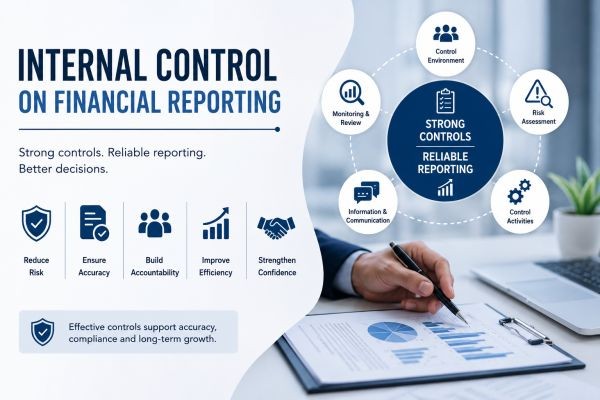
In today’s complex business environment, organisations face increasing pressure to maintain financial accuracy, regulatory compliance, and operational efficiency. Whether a company is a growing enterprise, a listed entity, or a multinational organisation, strong financial governance is critical to long-term success. This is where internal finance controls play a vital role.
Internal finance controls are not merely compliance requirements. They are strategic mechanisms that help businesses protect assets, prevent fraud, improve financial reporting, and support informed decision-making. At JP Chawala & Co. LLP, we help organisations strengthen their control frameworks to create a more resilient and transparent financial environment.
What Are Internal Finance Controls?
Internal finance controls refer to the policies, procedures, and systems implemented by an organisation to ensure the accuracy and reliability of financial information. These controls help businesses manage risks while ensuring that transactions are properly authorised, recorded, and monitored.
The primary objectives of internal finance controls include:
- Safeguarding company assets
- Preventing errors and fraud
- Ensuring accurate financial reporting
- Maintaining regulatory compliance
- Enhancing operational efficiency
- Supporting strategic decision-making
A robust control framework helps management gain confidence in the integrity of financial data while reducing the likelihood of financial misstatements.
Why Internal Finance Controls Matter
As businesses grow, financial processes become more complex. Without effective controls, organisations may face operational inefficiencies, compliance issues, and financial losses.
Improved Financial Reporting
Reliable financial reporting is essential for stakeholders, investors, lenders, and regulators. Effective internal finance controls ensure that financial records are complete, accurate, and prepared in accordance with applicable accounting standards.
This reduces the risk of reporting errors and strengthens stakeholder confidence.
Fraud Prevention and Detection
Fraud remains a significant concern for organisations across industries. Weak financial controls can create opportunities for unauthorised transactions, asset misappropriation, and financial manipulation.
Well-designed control mechanisms help identify unusual activities and establish accountability across departments.
Better Risk Management
Every organisation faces financial and operational risks. Internal finance controls help businesses identify, assess, and mitigate these risks before they impact performance.
By proactively managing risks, organisations can improve business continuity and protect their reputation.
Regulatory Compliance
Indian companies are required to comply with various statutory and regulatory requirements. Strong internal control systems support compliance with the Companies Act, accounting standards, taxation laws, and other regulatory frameworks.
A well-documented control environment also facilitates smoother audits and regulatory reviews.
Key Components of Effective Internal Finance Controls
A successful control framework typically includes several interconnected elements.
Segregation of Duties
No single individual should have complete control over an entire financial process. Dividing responsibilities reduces the risk of errors and fraud while improving oversight.
Authorisation Controls
Financial transactions should be approved by designated personnel according to predefined authority levels. This helps ensure that expenditures and commitments are properly monitored.
Documentation and Record Keeping
Accurate documentation provides an audit trail for every transaction. Proper records support transparency and make it easier to verify financial information during audits.
Reconciliation Processes
Regular reconciliation of bank accounts, ledgers, and financial records helps identify discrepancies and ensure accuracy.
Monitoring and Review
Internal controls should be continuously monitored and periodically reviewed to ensure they remain effective as business operations evolve.
Common Challenges Businesses Face
Many organisations struggle with maintaining effective control systems due to:
- Rapid business expansion
- Manual financial processes
- Inadequate documentation
- Lack of employee awareness
- Limited monitoring mechanisms
- Changing regulatory requirements
Addressing these challenges requires a structured approach supported by experienced professionals who understand both regulatory expectations and business realities.
How JP Chawala & Co. LLP Can Help
At JP Chawala & Co. LLP, we assist businesses in evaluating, designing, and strengthening their internal finance controls framework. Our professionals conduct comprehensive assessments to identify control gaps, evaluate risks, and recommend practical improvements tailored to each organisation’s needs.
Our services help businesses:
- Improve governance practices
- Strengthen financial reporting reliability
- Enhance compliance readiness
- Reduce operational risks
- Build stakeholder confidence
- Support sustainable growth
We work closely with management teams to develop control environments that are effective, scalable, and aligned with business objectives.
Conclusion
Strong internal finance controls are no longer optional—they are a fundamental requirement for business success. Organisations that invest in effective control frameworks are better positioned to manage risks, maintain compliance, and achieve long-term growth.
By implementing robust internal finance controls and regularly reviewing their effectiveness, businesses can create a culture of accountability, transparency, and financial discipline. Partnering with experienced advisors such as JP Chawala & Co. LLP ensures that your organisation has the right systems and processes in place to support future success.






