
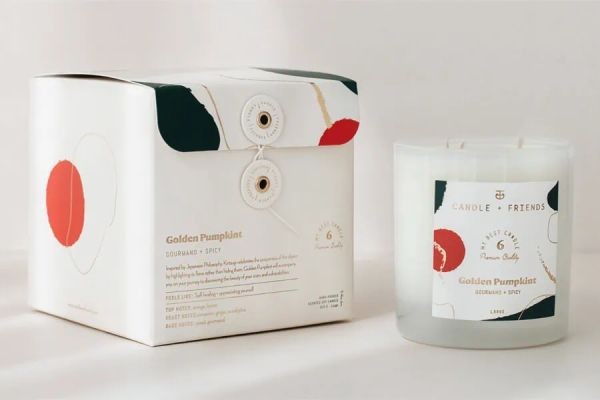
The shift towards sustainable packaging in the UK candle industry is accelerating. What began as a niche differentiator for a handful of eco-conscious brands has become a mainstream expectation that spans the entire market, from high-street gift shops to premium department stores and direct-to-consumer online brands.
In 2026, UK candle brands that have not yet made meaningful progress on packaging sustainability are increasingly finding themselves at a competitive and commercial disadvantage.
This article examines the specific drivers behind this shift from consumer demand to retailer requirements to regulatory changes and explores the practical ways UK candle brands are responding, with a focus on the sustainable packaging options that are delivering real results in the market today.
The Consumer Demand Driving the Shift
UK consumers have become significantly more environmentally literate over the past five years, and their expectations of the brands they buy from have risen correspondingly. The candle sector has been particularly affected by this shift because of its overlap with the wellness and self-care categories, where values-based purchasing is especially prevalent.
Candle buyers in the UK increasingly see their purchases as an expression of their identity and values, and a brand whose packaging contradicts those values creates a friction that can redirect spending to competitors.
The numbers are compelling. Multiple UK consumer surveys in 2025-26 found that more than half of candle buyers actively consider packaging sustainability when choosing between products, and that a meaningful proportion would pay a premium for packaging that they perceive to be genuinely eco-friendly.
For brands targeting younger consumers, particularly the 25-40 demographic that represents the core of the premium candle market, sustainability credibility is increasingly a threshold requirement rather than a bonus feature.
Social media has amplified this effect considerably. Unboxing content is ubiquitous across TikTok and Instagram, and packaging waste is routinely commented on both positively and negatively in these contexts.
A beautiful kraft box with a simple printed design generates the kind of appreciative commentary that builds brand love. Excessive plastic, non-recyclable laminations, and unnecessary secondary packaging generate the kind of critical commentary that spreads quickly and is difficult to recover from.
Retailer Requirements Are Raising the Bar
Independent UK retailers were among the earliest adopters of sustainable packaging requirements, but mainstream retailers are now following suit at scale.
Several major UK gift and lifestyle retail groups have published formal supplier packaging standards that include minimum recycled content requirements, restrictions on certain lamination types, and expectations around recyclability and disposal labelling.
For candle brands seeking or maintaining distribution through these retailers, compliance with these standards is now a commercial necessity.
The independent boutique sector, which remains one of the most important distribution channels for premium UK candle brands, is also increasingly selecting stocked brands partly on the basis of packaging sustainability.
Boutique buyers are often deeply values-driven, and they want the brands on their shelves to reflect the ethics they communicate to their own customers. A candle brand with compelling sustainable packaging credentials is simply an easier sell to these buyers than one that has not engaged with the issue.
Regulatory Context: UK Packaging Law in 2025
The UK regulatory environment for packaging is evolving rapidly, and candle brands need to understand the key obligations now in force or imminent. The UK Plastic Packaging Tax, now well-established, imposes a cost on plastic packaging components that contain less than 30% recycled plastic content.
For most candle packaging in the UK, which is primarily paper, board, and occasionally glass, this tax has limited direct impact. However, it has contributed to a broader shift in the packaging market away from plastic components, including the plastic window patches used in some candle box formats.
Extended Producer Responsibility (EPR) for packaging, which is being implemented progressively in the UK, will eventually require brands to pay fees based on the type and weight of packaging they place on the market, with more recyclable and lower-weight packaging incurring lower fees.
While the full implementation timeline has been subject to delays, the direction of travel is clear: brands with more sustainable packaging will face lower regulatory costs in the medium term.
The UK's Green Claims Code, enforced by the Competition and Markets Authority, sets out standards for how brands can communicate environmental claims about their products and packaging.
Vague claims "eco-friendly," "green," "kind to the planet" without substantiation are increasingly likely to attract regulatory scrutiny and consumer challenge. This is driving brands to move beyond greenwashing towards genuine, evidenced sustainability improvements.
What UK Candle Brands Are Actually Switching To
The practical packaging choices UK candle brands are making in their sustainability transitions vary considerably depending on their price point, volume, and aesthetic positioning. Some common patterns have emerged from the market over the past year.
The most widespread change is the adoption of FSC-certified board substrates as the baseline material for all candle packaging. This is a relatively low-cost change that delivers verifiable environmental credentials and is easily communicated to consumers through the FSC logo on packaging. It is now essentially table stakes for any UK candle brand with serious sustainability ambitions.
The second most common change is the replacement of non-recyclable BOPP lamination films with water-based coatings or recyclable alternatives. This is slightly more complex and more expensive, as recyclable laminates command a premium and may have different print properties than standard films.
However, it enables candle packaging to be genuinely recyclable through UK kerbside collections, a claim that is increasingly important to both consumers and retailers.
For brands with luxury positioning, the shift to sustainable packaging has required more creative thinking. Soft-touch lamination, which provides the signature velvety finish of many premium candle boxes, has traditionally been produced using non-recyclable polypropylene films.
UK packaging suppliers have responded to this challenge by developing soft-touch water-based coatings and biodegradable soft-touch films that replicate the tactile quality of traditional laminates while meeting recyclability standards.
Making the Business Case for Sustainable Packaging
For UK candle brand owners who are weighing the business case for sustainable packaging investment, the calculation looks increasingly favourable. The cost premium for certified, recyclable candle packaging has fallen significantly as supply has grown and demand has normalised.
In many cases, the price difference between standard and sustainably certified packaging is now in the range of 5-15% per unit a gap that is easily recovered through the pricing premium that genuine sustainability credentials support.
The reputational and commercial value of credible sustainability positioning in terms of retailer relationships, press coverage, social media sentiment, and customer loyalty is considerably harder to quantify but is substantial in the UK candle market context.
Brands that have made the transition consistently report that their sustainable packaging has become a positive talking point with retail buyers and a driver of organic social content that their previous packaging never generated.
Conclusion
The reasons UK candle brands are switching to sustainable packaging in 2025 are compelling and multiply-reinforced: consumers are demanding it, retailers are requiring it, regulations are encouraging it, and the commercial case is stronger than it has ever been.
The brands that act decisively, now making genuine, substantiated improvements to their candle packaging in the UK and communicating those improvements with clarity and honesty, will build the kind of sustainability credibility that is increasingly difficult to acquire and increasingly valuable in the UK market.






