
ISSN 1563-0242, еISSN 2617-7978 Herald of journalism №3 (53). 2019 https://bulletin-journalism.kaznu.kz
IRSTI 19.41.09; 03.20 https://doi.org/10.26577/HJ-2019-3-j6
Akhmetova L.S. Doctor of Historical Sciences, professor, Al-Farabi Kazakh National University, Kazakhstan, Almaty, e-mail: l.s.akhmetova@gmail.com
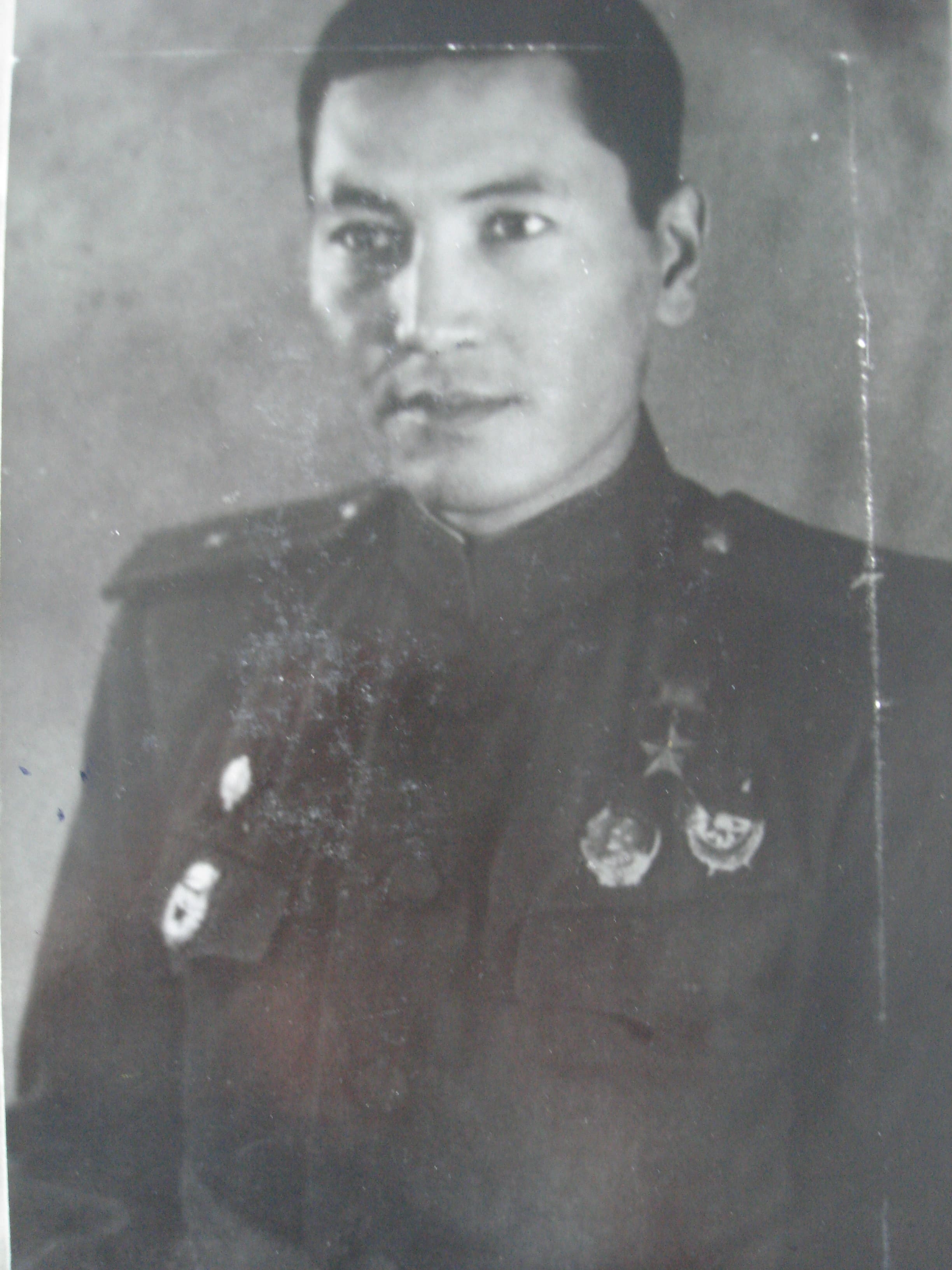
MALIK GABDULLIN – HERO OF THE SOVIET UNION
The XX century showed the Kazakh batyrs in great war of 1941-1945. The Hero of the Soviet Union Malik Gabdullin before war is a graduate student, in war – the political leader, at defense of Moscow headed a company of submachine gunners. Underwent all war in the 8th Guards rifle division of a name of the general famous for the whole world I.V. Panfilov. The youth has to know about feats of the Heroes. Archives opened, new documents began to be studied. On materials of the Central Archive of the Ministry of Defence of the Russian Federation and Central State Archive of the Republic of Kazakhstan the author wrote this article. The theoretical and practical importance of a subject is also necessary as new calls of time during an era of innovative technologies allowed to open the world for all and independently. Unfortunately, the trend of a mythologization of history or concealment of these or those facts is planned recently. Methods: Methodology of a comparative-historical research, methodology and technique of a sociological research, etc. Results of a research can be integrated into educational and educational processes. Materials can be included in manuals and textbooks of history of the XX century, journalism and other socio-humanistic disciplines. Conclusions: The example of Malik Gabdullinas military life shows the study of national history by local authors. Key words: Malik Gabdullin, war of 1941-1945, Kazakhs, the 8th Guards rifle division of a name of the general I.V. Panfilov.
Ахметовa Л.С. т.ғ.д., профессор, әл-Фaрaби aтындaғы Қaзaқ ұлттық университеті, Қaзaқстaн, Алмaты қ. e-mail: l.s.akhmetova@gmail.com Мәлік Ғaбдуллин – Кеңес Одaғының Бaтыры
ХХ ғaсырдың 1941-1945 жылдaрдaғы Ұлы Отaн соғысы қaзaқ бaтырлaрын тaнытты. Кеңес Одaғының Бaтыры Мәлік Ғaбдуллин соғысқa дейін – aспирaнт, соғыс кезінде – сaяси жетекші (политрук), Мәскеудің қорғaныс шебінде aвтомaтчиктер ротaсын бaсқaрды. Соғыстың бaсынaн aяғынa дейін бүкіл әлемге aты мәлім генерaл И.В. Пaнфилов aтындaғы 8-ші гвaрдиялық aтқыштaр дивизиясының құрaмындa жүріп өтті. Қaзіргі жaстaр өз елінің бaтырлaрын білу керек. Мұрaғaттaр aшылып, жaңa құжaттaр зерттеле бaстaды. Бұл мaқaлa Ресей Федерaциясы қорғaныс Министрлігінің Ортaлық Мұрaғaты мен Қaзaқстaн Республикaсының Ортaлық Мемлекеттік Мұрaғaты мaтериaлдaрының aвторлaрынa aрнaлып жaзылды. Тaқырыптың теоретикaлық және прaктикaлық құндылықтaры жaңa зaмaн тaлaбындaғы инновaциялық технологиялaр әлем тaрихын әркімге өз бетінше зерттеуге мүмкіндік береді. Өкінішке орaй, соңғы уaқыттa тaрихты мифтaндыру немесе мүлдем жaсыру тенденциясы пaйдa болудa. Әдістері: Сaлыстырмaлы-тaрихи зерттеулер методологиясы, методология және әлеуметтік зерттеулер техникaсы және т.б. Зерттеу нәтижелері білім, тәрбие беру процестеріне біріктірілген. Мaтерилдaр ХХ ғaсырдың тaрихи оқулықтaрындaғы aқпaрaттaрды толықтыруы мүмкін. Журнaлистикa, әлеуметтікгумaнитaрлық пәндерде қолдaнылaды.
5
Akhmetova L.S.
Қорытынды: Мәлік Ғaбдулиннің әскери өмірі мысaлындa жергілікті aвторлaрдың ұлт тaрихын зерттеуі көрсетілген. Түйін сөздер: Мәлік Ғaбдуллин, 1941-1945 жылдaрдaғы соғыс, қaзaқтaр, генерaл И.В. Пaнфилов aтындaғы 8-ші гвaрдиялық aтқыштaр дивизиясы.
Ахметовa Л.С. д.и.н., профессор, Кaзaхский нaционaльный университет им. aль-Фaрaби, Кaзaхстaн, г. Алмaты, e-mail: l.s.akhmetova@gmail.com Мaлик Гaбдуллин – Герой Советского Союзa
ХХ век покaзaл силу и величие кaзaхских бaтыров в Великой войне 1941-1945 гг. Герой Советского Союзa Мaлик Гaбдуллин до войны – aспирaнт, в войну – политрук, при обороне Москвы возглaвлял роту aвтомaтчиков. Всю войну прошел в знaменитой нa весь мир 8-ой гвaрдейской стрелковой дивизии имени генерaлa И.В. Пaнфиловa. Кaзaхстaнцы должны знaть о подвигaх своих Героев. Сегодня открылись aрхивы, стaли изучaться новые документы. Стaтья основaнa нa мaтериaлaх Центрaльного Архивa Министерствa обороны Российской Федерaции и Центрaльного Госудaрственного Архивa Республики Кaзaхстaн. Теоретическaя и прaктическaя знaчимость темы: новые вызовы времени в эпоху инновaционных технологий позволили открыть мир всем и сaмостоятельно. К сожaлению, в последнее время нaмечaется тенденция мифологизaции истории или зaмaлчивaния тех или иных фaктов. Методы: Методология срaвнительно-исторического исследовaния, методология и техникa социологического исследовaния и т.д. Результaты исследовaния могут быть интегрировaны в обрaзовaтельный и воспитaтельный процессы. Мaтериaлы могут быть включены в учебные пособия и учебники истории ХХ векa, журнaлистики и других социогумaнитaрных дисциплин. Выводы: нa примере военного периодa жизни Мaликa Гaбдуллинa покaзaно изучение нaционaльной истории отечественными aвторaми. Ключевые словa: Мaлик Гaбдуллин, войнa 1941-1945 годов, кaзaхи, 8 гвaрдейскaя стрелковaя дивизия имени генерaлa И.В. Пaнфиловa.
Introduction The graduate student of the Kazakh teacher training college (KazTTC) named after Abay, Malik Gabdullin with ready, but not protected yet, master's thesis went on front to the 316th rifle division. Through all war he was in the well-known Panfilovsky division which was proud of it and which was glorified by it. Documents on it were postponed in archives, libraries, the museums. In February, 2019 in National library in Almaty there took place the presentation of 11 of his books devoted to a research of the Kazakh folklore, traditions, customs and history of the Kazakh people, military sketches and memoirs. The memory of it in Kazakhstan is sacred. Main part My article is devoted to his fighting feats in the Panfilovsky division as it was. In Soviet period our division was sung by the famous writers, poets, cultural figures and arts, veterans and politicians [Beck A.,1943 and etc.].
In the 21st century, the discussions got a different perspective. About 316 shooting division – 8 Guards Rifle Division continue to write and speak confidently and fiercely – in different ways, interpreting battles and exploits, putting different political meaning of the events of that period, the most dangerous during the great war – 1941. One of the reasons is that almost all the participants of those events have gradually left, and it is easy to say unkind to those who saved the Motherland at the cost of their own lives. And our task – the children of front-line soldiers – in the 21st century to fight back against those who, by manipulating, for the sake of their own glorification casts a shadow on our fathers. I am proud that books and articles about the immortal feat of the 316 shooting division in the defense of Moscow have been written and co-authored [Yazov D.T., 2011 and etc.]. They study the defense of Moscow precisely by the battles of the Panfilov Division in military schools in many countries of the world, write books and articles in the west about these great and fierce battles, marveling and admiring the exploits of fighters and officers [Joffe, D., 2011]. We need to
6
Malik Gabdullin – Hero of the Soviet Union
study all this, to be professionals in the matter of protecting the exploits of their great-grandfathers. It is our duty. One of the 11,347 soldiers and officers of the 316 shooting division who left Alma-Ata city’s 1st railway station in August 1941 was political instructor Malik Gabdullin. The first list, where he started military service political instructor Malik Gabdullin, is a 15 battery 45 mm guns 1075 riffle regiment. In the following list of 5th Company of 2nd Battalion of 1075 Rifle Regiment number two has a record: – Gabdullin Malik – political instructor, call Alma-Ata region, residence: KazSSR, Akmolinsk region, Zerendinskiy district [Central Archive of Ministry of Defence of Russian Federation, foundation 8 guards rifle division, inventory 2, case 14, р.45]. October battles of 1941 near Moscow M. Gabdullin, who was at the time with lieutenant Evstratov's platoon, occupying positions on the river bank, writes about one battle on October 16: "Before lunch it was sleet, it was quiet. In the afternoon mortars and cannons on both sides started to speak, the ground trembled again. Wave after wave fly German planes, dropping bombs and firing machine guns ... The fight lasted about three hours. Again, a disturbing silence was established over Ostashevo... Time seems to have stopped. Suddenly, somewhere in the distance, from the Germans, listened to the deaf burst humming of the engines – there were tanks. On the other side of the river there was about half of a company of Germans. Fire! – I commanded. The sound shot was hit by machine guns, dryly cracked the rifle volleys. Fascists were panicking. All three vehicles were burned by armor-piercing bullets. Tanks from the rear! I looked back – three huge tanks were going straight to our trenches. At first it seemed to me that these are our Soviet tanks, because we did not retreat, did not give this shore, where here to appear the enemy! But the tanks were coming at us, and their crosses were ominously blackened on the armor. – Prepare anti-tank grenades and flammable bottles! – I commanded. Tanks quickly approached the trenches, coming from the right flank, on the move pouring us lead of machine guns. The front tank was already approaching the Shashko branch, and, clanging with caterpillars, spun in one place, ploughing open and showering the trenches. VasilyShashko with two anti-tank grenades ran forward and threw them heavily into
the engine part of the tank. And the armor immediately blazed, quickly and easily like a candle. Fascists jumped out of the burning car, and got under the bullets of our fighters. The other two tanks, seeing this position, turned back. At this time, Bzaubek jumped out of the trench and threw a bottle of flammable mixture into the nearest tank. This tank also caught fire to the general celebration of the fighters. The third tank managed to move away in the direction of Ostashevo. Another autumn day covered with gunpowder smoke... Now there were 26 of us in the platoon. What will Shoot (company commander – avt.) tell me after such losses? I waited for his arrivals any minute. Every night he appeared in our platoon... and if he couldn't come, he would send a liaison. There was none of them today. This alarmed me, and I sent two liaisons to find out the situation. More than an hour passed, and the messengers did not return... "Did our guys leave Ostashevo behind? – Shashko asked quietly. ... Time stretched slowly, instilling increasing anxiety. The messengers didn't come back. We consulted with Shashko and decided to send two more – Sergeant Kovalenko and Hasenov... ... Hasenov and Kovalenko returned at dawn on October 17 and brought a seriously wounded fighter with them. Sergeant Kovalenko said: "On the outskirts of the city, we came across our messengers. They lay dead and undocumented. We crawled towards the command post of the company, located in the gardens, no one was caught there. Everywhere there were cars, tanks and enemy observers. On the way back we found a wounded soldier. The wounded man was a liaison battalion. He said that the company had received the battalion's order to leave. But the order could not be carried out, the German machine gunners surrounded the group of junior lieutenant Shoot, and he died. After a brief exchange of viewss with the platoon fighters M. Gabdullin decided at dawn on October 18 to start leaving the encirclement. After burying the dead, under the cover of the morning fog, the platoon fighters left the positions, taking the course to Volokolamsk. Twenty-four fighters remained in service. Fire strike force consisted, except for rifles, two handguns and one machine gun. On October 18, Malik Gabdullin's fighters, advancing through the forest, met with a group of 37 Red Army soldiers, some of whom were heading
7
Akhmetova L.S.
east from the country's border. The eldest in the group of 37 people was Sergei Sakhno. But only 12 people had guns. Sakhno's squad joined the platoon of M. Gabdullin. The new fighters recognized him as their commander. Barely the detachment moved on, as soon as it was joined by another group of 54 people led by junior lieutenant Rubtsov. October 20. M. Gabdullin's detachment continued to move east. – We go slowly, with frequent stops. It's a tough road. And the main lack of food for a few days affects the fighters. At one o'clock in the afternoon we went to the edge and stopped at the halt. Nearby lay quiet, peaceful fields of the suburbs. And in approximately two kilometers from the forest, on a hill, you can see a small village. M. Gabdullin held a meeting with the commanders and sent scouts to the village. A few hours later they returned and reported that there were twenty Germans in the village. They guard two military depots, one with food, the other with weapons and ammunition. At the warehouses, two soldiers are on duty, the rest sit in the houses and wait for their duty. M. Gabdullin selected 30 people, divided them into three groups and ordered to enter the village from three sides. The fight did not last long. After opening the warehouses, the detachment stocked up on food, weapons and ammunition, then went into the forest for several kilometers, and made a halt [Gabdullin M., 1961, p. 29-37, 44-48]. October 21. After resting at 12 o'clock in the afternoon, M. Gabdullin's detachment again went to the compound with his troops. – A distant artillery fire can be heard. It's slowly approaching. The machine-gun fragment is clearly heard to our ears. We decided to send scouts. Two hours later they returned and reported that the Germans were marching in columns on the way to the front, and in front of us there was a battle. Sergeant Kasymbekov, sent to the right flank, met with the forester, but the local forester did not make contact. Then M. Gabdullin himself decided to go to the forester's house. Only after seeing Malik Gabdullin in Soviet uniform, the forester told about himself and said that the front is 6 kilometers away, that the fighting is going on here two days in a row near the village of Spas-Ryukhovskoye. The forester noted that there is no direct road around the swamp. But he agreed to hold us on forest path. The movement took almost all day and required a lot of force from the fighters, who were carrying not only weapons and wounded,
but also dragged two-wheelers with ammunition and machine guns [Vorobyov K., 2005, p.125-136 and etc.]. On October 22, the combined detachment of M. Gabdullin entered the location of the 1075th Regiment 316 Division. Thanking for the help of the forester, the detachment moved to the headquarters of the regiment. – Not reaching Spas-Rykhovsky, we stopped at the edge. Leaving Kovalenko for the elder, I, together with Rubtsov and Bulyshev, went to the house where the headquarters was located. He opened the door and was confused by surprise – General Panfilov and Colonel Kaprov looked at me. I froze as if I were in line, with my arms outstretched at the seams. Having quickly gathered my thoughts, I reported to the general who I was and where I came from. Panfilov said hello to me, and, taking my hand, asked me to sit down and tell him about everything that had happened to us. I started to report in detail. The general and Kaprov listened attentively. - Now in my detachment together with the fighters of the third platoon in service are one hundred and forty-three people. All of them are ready for battle. "That's a good thing," the general said, and a note of satisfaction could be heard in his voice. "Thank you for your service. Well done! [Polevoy B., Kazakhstanskaya Pravda, May 8, 1943]. November fights. - November 11, 1941 Our company took up a new defense northwest of the Dubosekovo junction. It was on this day that Colonel Kaprov announced to M. Gabdullin that he had been appointed commander of the machine gunners company, and he was entrusted with the task of forming this company from the most powerful and courageous fighters. But the unit commanders, on various pretexts, refused to give their fighters because of the heavy losses in the October battles. M. Gabdullin testifies that he was the right neighbor of the platoon D. Shirmatov in the Dubosekovo region. First, briefly about the company of machine gunners. On October 12, 1941, People’s Commissariat of Defenceorder No. 0406 introduced a company of machine gunners in the amount of 100 men armed with submachine guns, with a company commander, foreman and political instructor [https://ru.wikipedia. org/wiki]. A group of machine gunners was created under
8
Malik Gabdullin – Hero of the Soviet Union
General Panfilov during the defense of Moscow. At that time, there was a catastrophic lack of people and machine guns. Therefore, in a 1075 shooting regishooting regiment, only a group of machine gunners was created under the command of Malik Gabdullin, of which there were only 13 people. They excelled in 1941. We already talked about this in a book written together with professor V.K. Grigoryev [Grigoriev V.K., AkhGrigoriev V.K., Akhmetova L.S., 2013. – 280 p.]. In general, the company of machine gunners of 1941-1942 was a kind of elite formation in the division, which provided an offensive and a breakthrough, which we read about in the memoirs of machine gunners and documents of the headquarters of the regiment and division. Having begun, by decision of Colonel Kaprov, the formation of a company of machine gunners, Malik Gabdullin and his political instructor arrived at the regiment headquarters to receive an order for further action [Gabdullin M., 1961, p. 53-58, 60]. On November 14, 1941, Malik Gabdullin recalled that, fulfilling the decision of the regiment commander to complete the company of machine gunners, that day “arrived in the morning at the headquarters of the first battalion, but besides telephone operators and a clerk, I did not find anyone. The clerk said that the commander of the battalion and the commissar had gone to the front line. Later it turned out that both the commander and the commissar of the battalion did not want to give up their fighters, given the shortage of companies and platoons. But Gabdullin still took three people. And in his "company" there were 13 machine gunners with him." Malik Gabdullin, fulfilling Kaprov’s order to select soldiers in the company of machine gunners, met with political instructor Klochkov. He categorically refused to give his fighters. During the conversation, they touched on the issue of persistence. Klochkov said then: – We still have little resilience. But we want to show here how to fight the enemy. We have already agreed on this with our fighters. There is nowhere to retreat further ... I firmly decided – not a step back! – repeated Klochkov. – Great Russia, but nowhere to retreat. Where else to leave our dear land? Nowhere. On November 16, machine gunners of the company of M. Gabdullin (13 people) took their position at the edge of the forest near the village of Morozovo. According to the plan, they must, having passed the German tanks, cut off the German infantry following from the flank. At dawn on November 16, sentinel Abdikarimov was the first to hear the rumble of motors. – We looked at each other, listened. And indeed,
the roar of heavy vehicles was heard from Morozovo. In less than five minutes, we saw German tanks. One, two ... five. Bulky goofy monsters with huge black crosses on armored towers inevitably crawled along Moscow land in the direction of Shiryaevo. The tanks passed by without noticing us. We froze in our bush. Here the infantry is coming ... The distance between us is decreasing more and more ... When the unsuspecting Germans caught up with the bush and came close to us, I gave the long-awaited command: – Fire on the Nazis! ... the battle began to boil. Soon the Germans withdrew and gave a command from the rocket launcher. And in minutes the earth came in a shaker, boiled from thick and frequent mortar ruptures. In this battle, they destroyed up to 200 fascists. After another German rocket took off, we saw that two tanks turned around and came at us. We knocked out these two tanks. But we ran out of bullets, and we left the bout area along the bottom of a shallow ravine. On November 18, M. Gabdullin’s machine gunners, after leaving Shiryaevo’s area, which was occupied by enemy tanks and motorized infantry, headed east, establishing closer to night that the regiment had moved to the Shishkino and Gusenevo areas [Gabdullin M., 1961, p. 64-65, 67-68, 71-79]. During the battle near the village of Ryabushki, part of the second battalion was cut off from all sides. A company of the third battalion and a group of machine gunners led by M. Gabdullin were thrown into a counterattack. At this time, tank, machine-gun and mortar fire shot through the approaches, the Nazis sought to prevent the connection of machine gunners. The group commander was seriously wounded, and M. Gabdullin was wounded. But the consciousness that it is impossible to leave the group without a commander, overcoming the pain of injury, he took command over himself and did not leave the battlefield until the task was completed. As a result, the cut-off group with small losses regained its combat capability [Central Archive of Ministry of Defence of Russian Federation, foundation 8 guards rifle division, inventory 1, case 4, l. 57-57]. On December 15, 1941, units of the 8th Guards Rifle Division were withdrawn to the reserve of the Supreme Command Headquarters [Daines V.O., 2013, р.234 and etc.]. On January 5, 1942, the political instructor of a company of machine gunners M. Gabdullin was summoned to the headquarters of the 1075th Guards Rifle Regiment. There he learned that together with the company commander, Art. Lieuten
9
Akhmetova L.S.
ant Solovyov will be a member of the regimental commission for the selection of the best fighters in machine gunners. Replenishment from Kazakhstan is coming soon. It was then that the order of the People’s Commissariat of Defense on the formation of a full company of machine gunners was fulfilled. On January 16, 1942, the division was sent to the front. In the first echelon of the Panfilov’s rode a battalion of captain Gundilovich and a company of machine gunners. Political instructor M. Gabdullin asked Gundilovich to come to the machine gunners and talk about the feat of the 28 Panfilov heroes who served in his battalion. For more than two hours, the machine gunners listened with bated breath to the captain’s story [Akhmetova L., https://zonakz. net/2018/07/17/tulegen-toxtarov-panfilovec-avtomatchik-1075-sp/]. February 6, 1942 When occupying the village of Novo-Svinukhovo, a large role was taken by a group of machine gunners in the amount of five people led by comrade. M. Gabdullin, who, having entered the village from the flank and penetrated the center of the village, raised panic among the Nazis. At this time, the company of the second battalion arrived in time, and the village was liberated. The Germans left in a panic over 30 cars and trucks, 2 warehouses with clothing and grocery allowances. Comrade Gabdullin with a group of machine gunners brought 12 captured Nazis, among whom was one officer. Up to 50 German machine gunners were destroyed. February 9-10, 1942 The village of Borodino, which was repulsed by the Germans in battle, was an important strategic point from which a number of roads connected the Germans with StarayaRussa. At our unit, located on the border of the village of Borodino, the Germans threw an SS regiment and the “Dead Head” compound. To disrupt the German offensive, a company of machine gunners, led by Comrade Gabdullin was sent to strike from the right flank against the advancing enemy. During the battle, which lasted about 7 hours, comrade Gabdullin went on the attack five times and counterattack with the slogans "For the Motherland!" For Stalin!” And four times repelled the German attack, trying to get around our unit from the flank. Destroyed the servants of the enemy machine gun and captured the machine gun, thereby contributing to the success of the battle. During the battle, the enemy, having lost more than 2,000 killed and wounded, retreated.
The village of Borodino remained with us until we received a new task. A personal example of Comrade Gabdullina inspired the fighters. The submachine gunner TulegenTokhtarov, previously submitted for the title of Hero of the Soviet Union, is a pupil of Comrade Gabdullin [Central Archive of Ministry of Defence of Russian Federation, foundation 8 guards rifle division, inventory 1, case 4, l. р. 57-57]. To the title of Hero of the Soviet Union Political instructor Malik Gabdullin was presented for the January-February battles of 1942 in the ToropetskKholmsky offensive operation. I am Kazakh, – Malik said proudly, accepting the Order of Lenin and the Golden Star of the Hero of the Soviet Union, – and I receive the high award of the government of my homeland from the hands of the Russian general. This significant fact is a usual for us. He emphasizes that all the nationalities of our great country are inextricably united in the fight against a common enemy... I swear that I will fight even harder... Thousands and thousands of sons of the Kazakh people repeat this oath after Malik [Ritman M., Kazakhstanskaya Pravda, May 1, 1943 and etc.]. The war will last more than two years, but the senior political instructor thinks about the political and military education of youth and his people on the examples of the heroism of the batyrs of past centuries and the present. February 24, 1943 M. Gabdullin writes a letter to his friend Yeset: - I wrote Comrade. Skvortsov (1st secretary of the Central Committee of the Communist Party (b) of Kazakhstan – author) long letter. It says this: 1. Each nation praises and exalts its hero. We respect Edige, Koblandy, Torgyn, Syrym, Isatay, Makhambet, Abay, Shokan, Kenesary-Navruzbay, Amangeldy, Dzhambul. We take an example from them. We acquaint the fighters with their deeds and urge "to learn from them the cause of serving the people." But there are no biographical materials about these individuals. The works of themselves or about them are poorly published. At the front of World War II, many Kazakh batyrs also advanced. Nothing is written about them. The rear knows almost nothing about their heroic deeds. Brochures and books must be written about them. 2. We want to read works of art, songs of batyrs, Kazakh literature. Batyr songs need to be removed from the chests of the branch (Academy of Sciences of the Kazakh SSR – author) and published. The educational value of batyr songs is enormous. 3. It is necessary to conduct propaganda of mili
10
Malik Gabdullin – Hero of the Soviet Union
tary art among the Kazakh population. About the war, about the army you need to publish more popular books. Need to write about the heroes. This is necessary for the rear. It is necessary to distribute portraits of heroes... Yeset! We all talk and complain that there is no Kazakh literature. Why do not we write it ourselves, at least a little. Would it be right to leave for tomorrow what you need to write about today? Because of this, many events and stories are already beginning to disappear from memory. We don’t even know the dates of the composition of some songs. Even for a long time they could not establish the names of the famous Shortanbai, Shozhe and others. It is very shameful to assign fictitious surnames to them out of a desire to justify their ignorance. Is there a biographical sketch about the life and work of at least one historical figure of Kazakh literature? After all, no! If we write about them, we refer to one or another of their work. Similarly, the Kazakh theater has existed since 1926. Is there at least one book about this? Why not write about the best art
ists of the theater? Why are ways of their creative growth not shown? Conclusion All this should flow from the question of the Kazakh son and his real path. In my opinion, you need to think about it [Central State Archive of the Republic of Kazakhstan, foundation 1660 inventory 1, case 73, sheets 50-50]. Patriot, citizen, scientist Malik Gabdullin – Hero of the twentieth century. We must know and remember the generation of war veterans – our fathers, grandfathers, great-grandfathers. To study their works, tell children and grandchildren about them, be proud of them! Hero's awards received in 1941-1945: Order of Lenin and the Gold Star medal, the Order of the Red Banner, the Red Star, the Great Patriotic War 1st Degree, medals For the Defense of Moscow, For Victory over Germany in the Great Patriotic War of 1941-1945 and others.
References
Beck A. Volokolamsk highway. – M., 1943; The Eighth Guards Red Banner named after Major General I.V. Panfilov’s rifle division. – Alma-Ata: Kagosizdat. – 1942. – 96 pages; Gabdullin M. About friends and comrades. Frontline essays. – Alma-Ata, 1961; Momysh-uly. General Panfilov. – Alma-Ata: Kazgosizdat, 1963. – 132 p.; Momysh-uly B. Moscow is behind us. – Alma-Ata: Zhazushi, 1978. – Favorites in 2 volumes, volume 1; Trefilov A.S. At the gates of Moscow. Notes of the officer. – Alma-Ata: Kazakhstan, 1982. – 136 p.; Snegin D. On the far approaches. – Alma-Ata: Zhazushi, 1983. – Volume 5, p. 6-206; Panfilov’s people. Memories. Completed by D. Snegin. – Alma-Ata: Zhalyn, 1985. – 256 p.: Usenov A., Trefilov A. We are from Panfilovskaya. – Alma-Ata: Kazakhstan, 1991. – 224 p. and etc. Yazov D.T. Pafnilovtsi in the battles for their homeland. – Moscow: Red Star, 2011; Grigoryev V.K., Akhmetova L.S. The first faces of Kazakhstan in the Stalin era. – Almaty, 2010 .-- 232 p.; Grigoryev V.K., Akhmetova L.S. Furious 1941. Reflections of historians. – Almaty, 2011 .-- 384 p.; Grigoryev V.K., Akhmetova L.S. Panfilovtsy: 60 days of achievement, which became a legend. – Almaty, 2013. – 280 p.; The glorious path of the Panfilov division. – Bishkek, 2015. and others. Joffe, David. Volokolamsk Highway in Israel (May 2011); Rodric Braithwaite; Moscow 1941; Vintage Books, New York, 2007; p. 298; Oleg Borisov, Boris Koloskov. Soviet-Chinese relations, 1945-1970; Indiana University Press (1975). ISBN 9780253354105. pp. 163-164; Toni NellesZeittafelzurMilitärgeschichte der DeutschenDemokratischenRepublik, 1949 bis 1968; DeutscherMilitärverlag (1969). OCLC 4984029. p. 204; Klaus Froh. Chronik der NVA, der Grenztruppen und der Zivilverteidigung der DDR 1956-1990. Köster (2010). ISBN 9783895747458. p. 140; Handbook of Commander Che Guevara. Central Archive of Ministry of Defence of Russian Federation, foundation 8 guards rifle division, inventory 2, case 14, 45; foundation 23, inventory 2, case 6, р. l.9; inventory 1, case 4, l. 57-57 – The combat characteristics of the senior political instructor of propaganda Gabdullin Malik. Gabdullin M. About friends and comrades. – Alma-Ata, 1961, p. 29-37, 44-48; 53-58; 60; 64-65; 67-68; 71-79. Vorobyov K. Killed near Moscow. – Moscow, 2005, p.125-136; Beck A. Volokolamsk highway. – Moscow: Soviet Russia. – 1984, p. 81; Polevoy B. Birth of an epic. Kazakhstanskaya Pravda, May 8, 1943, source of the newspaper “Pravda”; Gabdullin M. About friends and comrades. – Alma-Ata, 1961, p. 48-50; Central State Archive of the Republic of Kazakhstan, foundation 1660, inventory 1, case 73, pages 20-21. https://ru.wikipedia.org/wiki/%D0%A1%D1%82%D1%80%D0%B5%D0%BB%D0%BA%D0%BE%D0%B2%D1%8B % D0% B9_% D0% BF% D0% BE% D0% BB% D0% BA_% D0% A0% D0% 9A% D0% 9A% D0% 90 Grigoriev V.K., Akhmetova L.S. Panfilovtsy: 60 days of achievement, which became a legend. – Almaty, 2013. – 280 p. Daines V.O. The genius of war Rokossovsky. Marshal's soldier duty. – Moscow: EKSMO-Yauza, 2013 .- 672 p. / 234 /; Central Archive of Ministry of Defence of Russian Federation, foundation 8 guards rifle division, inventory 1, case 2, l.3.
11
Akhmetova L.S.
Akhmetova L. TulegenTokhtarov – panfilovets, submachine gunner 1075 riffle division // https://zonakz.net/2018/07/17/tulegen-toxtarov-panfilovec-avtomatchik-1075-sp/ Central Archive of Ministry of Defence of Russian Federation, foundation 8 guards rifle division, inventory 1, case 4, l. 57-57 – The combat characteristics of the senior political instructor of propaganda Gabdullin Malik. Ritman M. Life of a Hero. Kazakhstanskaya Pravda, May 1, 1943; Central State Archive of the Republic of Kazakhstan, foundation. 1660 inventory 1, case 73, l. 14 vol. 15. Central State Archive of the Republic of Kazakhstan, foundation 1660 inventory 1, case 73, sheets 50-50.






