
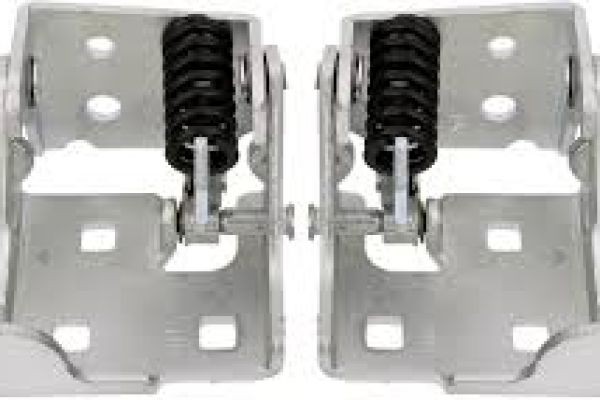
The Automotive Door Hinges Market forms an essential part of the global automotive components industry, providing critical hardware that enables vehicle doors to open, close, align, and remain securely attached to the body structure. Although door hinges are relatively small components, their role in ensuring safety, durability, and user convenience is substantial. As vehicles become more advanced, heavier, and technologically integrated, the design and performance requirements for door hinges have evolved significantly, transforming them from simple mechanical parts into precision-engineered systems.
At its core, a door hinge serves as the pivot point that supports the entire weight of the door while allowing controlled movement. Modern automotive doors are complex assemblies containing safety reinforcements, electronic systems, sound insulation, and comfort features. Side-impact beams, airbags, speakers, wiring harnesses, power window mechanisms, and advanced materials all contribute to increased door weight. Consequently, hinges must be engineered to handle substantial loads without deforming, loosening, or causing misalignment over time. This need for high load-bearing capacity is a central factor shaping the market.
Global vehicle production trends strongly influence the demand for automotive door hinges. Rising urbanization, expanding middle-class populations, and growing mobility needs continue to drive passenger and commercial vehicle manufacturing worldwide. Each vehicle typically requires multiple hinge systems not only for doors but also for tailgates, hoods, and specialized access panels. As production volumes increase, manufacturers must scale up output while maintaining consistent quality and cost efficiency.
Material technology is a defining element of the market landscape. Traditional hinges made from stamped steel remain dominant due to their strength, durability, and affordability. However, the push for vehicle lightweighting has encouraged the adoption of advanced high-strength steels, aluminum alloys, and hybrid material solutions. Lightweight hinges help reduce overall vehicle mass, improving fuel efficiency and extending the range of electric vehicles. Achieving the optimal balance between weight reduction and structural performance requires sophisticated design and manufacturing techniques.
Corrosion resistance is another critical aspect of hinge performance. Positioned at exposed joints, hinges are vulnerable to moisture, dirt, road salt, and temperature fluctuations. Over time, corrosion can impair movement, generate noise, and reduce structural integrity. To ensure long-term reliability, manufacturers apply protective treatments such as galvanization, electroplating, powder coatings, and specialized surface finishes. These measures help maintain smooth operation and prevent premature failure in diverse environmental conditions.
Precision and alignment requirements are equally important. Proper door fit affects vehicle aesthetics, aerodynamic efficiency, weather sealing, and noise reduction. Even minor deviations can lead to wind noise, water leakage, uneven panel gaps, or difficulty closing the door. As a result, hinges must be manufactured to extremely tight tolerances and installed with high accuracy during assembly. Automated production lines and robotic positioning systems are increasingly used to achieve consistent results across large-scale manufacturing.
Safety considerations significantly shape hinge design and testing. During collisions, hinges must prevent doors from detaching while allowing emergency access to occupants. They must withstand high impact forces and maintain structural integrity in side crashes and rollovers. Meeting these requirements involves rigorous validation processes, including fatigue testing, corrosion testing, and crash simulations. Compliance with safety standards is a non-negotiable requirement for suppliers seeking contracts with major automakers.
The shift toward electric vehicles is introducing new dynamics into the market. Electric vehicle architectures often feature large battery packs that influence body structure and weight distribution. Doors may require additional reinforcement to maintain rigidity, increasing demands on hinge strength. Furthermore, the quiet operation of electric drivetrains makes mechanical noises more noticeable, prompting manufacturers to focus on noise, vibration, and harshness reduction in hinge design.
Technological advancements in vehicle design are also driving innovation. Frameless doors, sliding doors, rear-hinged configurations, and wide-opening systems are becoming more common, particularly in premium and specialized vehicles. These designs enhance accessibility and aesthetics but require customized hinge solutions capable of supporting unique motion paths and load characteristics. Developing such solutions involves extensive research, prototyping, and testing.
Manufacturing efficiency remains a key competitive factor. Door hinges are produced in extremely high volumes, often under tight cost constraints. Suppliers must optimize processes such as stamping, forging, machining, and assembly to minimize material waste and maintain productivity. Automation, digital quality control, and real-time monitoring systems help ensure consistency and reduce defects, which is essential for maintaining relationships with original equipment manufacturers.
The aftermarket segment provides additional growth opportunities. Over time, hinges may wear due to repeated use, corrosion, or mechanical stress, requiring replacement. The expanding global vehicle fleet ensures ongoing demand for replacement components, particularly in regions where vehicles remain in service for extended periods. Aftermarket products must balance affordability with durability and ease of installation.
Sustainability considerations are becoming increasingly important across the automotive supply chain. Manufacturers are exploring recyclable materials, environmentally friendly coatings, and energy-efficient production methods to reduce environmental impact. Lightweight hinge designs contribute indirectly to sustainability goals by improving vehicle efficiency and lowering emissions.
Globalization has also shaped the market’s structure. Automotive production is distributed across multiple regions, leading to the establishment of local manufacturing facilities and supply networks. Suppliers must meet diverse regulatory requirements and environmental conditions while maintaining consistent quality standards worldwide.
In conclusion, the Automotive Door Hinges Market is a vital component of modern vehicle engineering, driven by rising production volumes, evolving safety standards, material innovation, and technological progress. Despite their modest size, door hinges play a crucial role in ensuring vehicle functionality, durability, and user satisfaction. As the automotive industry continues to transition toward electrification, advanced connectivity, and new mobility concepts, the demand for high-performance hinge systems is expected to remain strong. Manufacturers that can deliver lightweight, corrosion-resistant, and precision-engineered solutions will be well positioned to succeed in this essential and evolving market segment.






