
The human scalp hosts an intricate network of independent micro-organs working continuously to generate, grow, and shed hair fibers. When the delicate internal biological clock governing this process is disrupted by genetic factors, physical stress, or environmental changes, hair volume can drop rapidly. Instead of maintaining standard thickness, affected follicles spend less time growing and more time resting, leading to visible scalp exposure.
Reversing this process requires a deep biological solution that goes beyond superficial topical treatments. Modern clinical trichology focuses on modifying these internal growth timelines at a cellular level. Opting for a specialized PRP Hair Treatment in Dubai provides a highly targeted, autologous method designed to extend the active growth phase of your hair. By introducing concentrated signaling proteins directly to the hair roots, this non-surgical therapy helps weak follicles stay active longer, safely increasing hair density from within.
Decoding the Three Phases of the Follicular Lifecycle
To understand how autologous plasma successfully restores thinning hair, it is helpful to examine the biological microenvironment of the human scalp. Every individual hair follicle cycles continuously through three primary phases:
[Anagen Phase] (Active Growth: 2–6 Years)
       │
       ▼
[Catagen Phase] (Transitional Regression: 2–3 Weeks)
       │
       ▼
[Telogen Phase] (Resting & Shedding: 3–4 Months)
In a healthy, well-nourished scalp, approximately 85% to 90% of all hair follicles are actively engaged in the anagen phase at any given moment. This prolonged period of cell division allows hair shafts to grow consistently thicker, longer, and more resilient. However, when progressive hair loss or androgenetic alopecia takes hold, this healthy ratio is disrupted. The active growth phase is progressively cut short, forcing follicles into early regression and extended periods of inactivity.
Reversing Hair Thinning by Extending the Anagen Phase
The core clinical objective of utilizing platelet-rich plasma therapy is to alter these changing follicular timelines. When highly concentrated platelets are precisely delivered into the deep dermal layers of the scalp, they release vital intracellular signaling proteins. Key components like Transforming Growth Factor (TGF) and Fibroblast Growth Factor (FGF) work together to improve localized tissue oxygenation and stimulate active cell division within the hair roots.
This influx of concentrated bio-signals acts as a direct command to the hair root's cellular matrix. By overriding the chemical triggers that cause early shedding, the treatment allows follicles to remain in the active growth phase for a significantly longer period. This extension gives the hair roots the time they need to rebuild their structural foundations, reversing the thinning process and allowing fine, weak hairs to develop into thick, full-weight terminal strands.
Suppressing Pro-Apoptotic Signaling Cascades
Beyond promoting active growth signals, autologous plasma serves as a protective shield against premature cellular aging and cell death within the hair root. As genetic hair loss advances, the dermal papilla cells experience an increase in pro-apoptotic (cell-death inducing) signaling molecules. These negative signals force the follicle to detach from its blood supply and enter a premature resting state.
The concentrated growth factors in the plasma counter this decline by introducing anti-apoptotic proteins directly to the hair roots. This biological support system blocks the destructive pathways that lead to follicle regression, protecting the structural integrity of the hair root. By safeguarding these vital cellular structures, the therapy helps prevent early shedding and stabilizes global hair density across the treated areas.
Clinical Protocols: The Extraction and Activation Process
Achieving a highly effective plasma solution requires a precise, multi-step laboratory workflow designed to keep the cells fully viable. The entire non-invasive clinical procedure is carried out within a sterile, state-of-the-art medical facility and is normally completed within 45 to 60 minutes.
1. Controlled Phlebotomy Collection
The process begins by safely drawing a small sample of peripheral whole blood, typically between 10ml and 20ml, from the patient's arm using a sterile, single-use vacuum collection tube.
2. Dual-Spin Centrifugal Isolation
The collected sample is immediately placed into a precisely calibrated medical centrifuge system. The blood undergoes a meticulous separation process at exact speeds to separate heavy red blood cells from the lighter, nutrient-dense plasma layers.
3. Plasma Extraction and Delivery
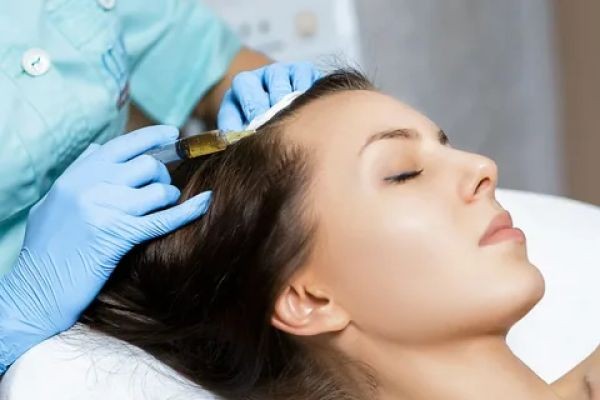
The primary middle layer, containing an exceptionally dense concentration of active platelets, is carefully drawn into sterile micro-syringes. Using micro-fine needles, the practitioner gently delivers the concentrated solution into the deep dermal layers of the scalp, spacing the injections precisely 1cm apart across the thinning zones.
Strategic Mapping for Complete Scalp Coverage
The precise nature of autologous plasma injections enables medical practitioners to fully customize the treatment layout based on each patient's specific pattern of hair loss. Because hair thinning rarely affects the scalp completely evenly, an individual assessment determines where the concentration of growth factors is needed most.
Targeted Hairline Support
For individuals experiencing early recession along the fronto-temporal regions, the micro-injections are tightly mapped along the advancing borders. This focused delivery helps protect vulnerable roots from localized hormonal changes, preserving a natural, strong frontal appearance.
Vertex and Crown Densification
In cases where thinning is centered across the crown or vertex, the clinical layout shifts to a concentric grid pattern. This ensures the concentrated plasma is distributed evenly across expanding part lines, optimizing overall hair volume and reducing visible scalp exposure under direct light.
Determining Candidacy: Assessing Follicular Responsiveness
To secure an exceptional aesthetic outcome, a professional evaluation of the current stage of hair loss is essential before beginning treatment. Platelet-rich plasma functions as a natural cellular accelerator, meaning its success depends on the presence of living, responsive hair roots beneath the skin.
Highly Favorable Clinical Profiles
The most rewarding transformations are consistently seen in individuals navigating the early to moderate stages of diffuse thinning, telogen effluvium, or patterned alopecia. In these cases, the scalp still contains active, miniaturized hair roots that can readily respond to autologous growth signals.
Limitations in Advanced Cases
Conversely, individuals facing long-term, advanced scarring alopecia or those with smooth, completely bald scalp regions are not ideal candidates for this therapy. When hair roots have permanently vanished or transitioned into fibrotic scar tissue, surgical hair restoration alternatives are often more appropriate to re-establish coverage.
Establishing a Proactive Long-Term Care Routine
Because hair thinning is an ongoing biological process influenced by genetics and lifestyle factors, maintaining optimal hair density requires a consistent commitment to long-term scalp care. A single initial series of sessions cannot permanently stop hair loss; ongoing support is necessary to keep your hair roots energized and protected.
To maintain your results over time, scheduling single maintenance sessions every four to six months after completing your initial treatment plan is highly recommended. Supporting your clinical care with healthy daily habits—such as staying well-hydrated, eating a protein-rich diet filled with essential minerals like zinc, and avoiding harsh chemical styling products—further enhances your outcomes. This comprehensive approach ensures your hair roots remain firmly protected, helping you maintain full, healthy hair volume year after year.
Conclusion
Overcoming progressive hair loss requires an intelligent approach that targets the root causes of follicle decline within the deep dermal layers of the skin. By optimizing localized nutrition and restoring balance to the scalp microenvironment, autologous growth factors offer a reliable, non-surgical pathway to stabilize hair shedding and regain lasting density. Taking a proactive step to support your hair health today ensures your follicles retain the vitality needed to thrive over the long term.
At Tajmeels Clinic, our highly experienced medical specialists combine cutting-edge plasma isolation technology with a deep understanding of trichological science to provide elite, personalized care. We invite you to contact our professional clinic team today to schedule your private scalp consultation and begin your journey toward total hair rejuvenation.






