
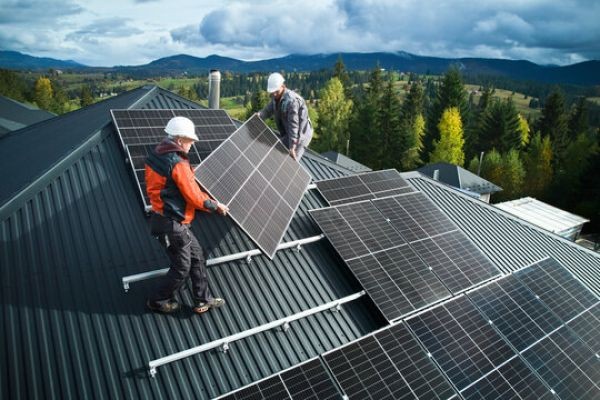
The global shift toward renewable energy is accelerating, with solar photovoltaic installations playing a central role in reducing dependence on fossil fuels. However, despite strong technological progress and rising demand, several underlying constraints continue to act as inhibitors that slow down large-scale adoption. From a business perspective, understanding these inhibitors is critical for risk assessment, investment planning, and long-term market scalability.
Capital Intensity and Investment Risk Perception
The Solar Photovoltaic Installations Market Inhibitors are strongly influenced by the high capital intensity required for project development. Although solar energy reduces long-term operational costs, the upfront investment for panels, inverters, land, installation, and grid integration remains substantial.
This high initial expenditure creates hesitation among investors and end users, particularly in price-sensitive and emerging markets. The perception of financial risk is further amplified by long payback periods in certain regions where energy tariffs are low.
Even with financing mechanisms available, uneven access to capital continues to restrict widespread deployment.
Regulatory Uncertainty and Policy Instability
Policy inconsistency remains one of the most significant inhibitors in the solar photovoltaic installations market. In many regions, renewable energy regulations, incentives, and tariff structures change frequently, creating uncertainty for long-term investment planning.
Lengthy approval procedures and complex compliance requirements further slow down project execution. In some cases, sudden policy reversals can impact project viability and discourage new investments.
The lack of harmonized global regulations also limits cross-border scalability for companies operating in multiple regions.
Grid Limitations and Infrastructure Constraints
Existing grid infrastructure in many countries acts as a major inhibitor to solar energy integration. Traditional power grids were designed for centralized energy generation and are not fully equipped to handle distributed and variable renewable inputs.
This creates challenges such as grid congestion, voltage fluctuations, and energy curtailment. In some cases, excess solar energy cannot be efficiently transmitted or absorbed, reducing overall system effectiveness.
Upgrading grid infrastructure requires significant time and investment, slowing down the pace of solar adoption.
Intermittency and Energy Storage Limitations
Solar energy generation is inherently dependent on sunlight availability, making intermittency a natural operational inhibitor. Variability in weather conditions, seasonal changes, and geographic differences affect energy consistency.
Without advanced storage solutions, solar systems cannot always provide continuous power supply. Although battery technologies are improving, high costs and scalability limitations still restrict widespread adoption.
This reliability challenge is particularly significant for industrial and critical infrastructure applications that require uninterrupted energy supply.
Supply Chain Vulnerability and Material Dependency
The solar photovoltaic installations market is highly dependent on global supply chains for key components such as silicon wafers, solar cells, and electronic inverters. Any disruption in this supply chain can act as a major inhibitor to market growth.
Geopolitical tensions, trade restrictions, and transportation bottlenecks can lead to delays and price fluctuations. Dependence on limited manufacturing regions further increases vulnerability.
Raw material price volatility also impacts project economics and reduces predictability for investors.
Land Use Restrictions and Environmental Concerns
Large-scale solar installations require significant land area, which can create constraints in densely populated or agriculturally valuable regions. Competition for land use between agriculture, urban development, and energy projects limits availability.
Environmental considerations, including ecosystem disruption and land transformation concerns, also act as inhibitors in project approvals.
Although rooftop solar reduces land dependency, it cannot fully meet large-scale energy demand requirements.
Technical Skill Shortages and Operational Limitations
A shortage of skilled professionals in design, installation, and maintenance acts as another inhibitor in the solar photovoltaic installations market. Advanced solar systems require specialized technical expertise for efficient deployment and operation.
In many regions, lack of trained workforce slows down installation rates and increases operational inefficiencies. Limited access to technical training programs further intensifies this issue.
As systems become more complex and digitally integrated, the demand for skilled labor continues to rise.
Economic Fluctuations and Financial Instability
Macroeconomic conditions also serve as inhibitors for the solar photovoltaic installations market. Inflation, rising interest rates, and currency volatility can affect project financing and overall investment attractiveness.
Economic downturns often lead to reduced public and private investment in renewable infrastructure, slowing market expansion.
Unstable financial conditions can also increase borrowing costs, making solar projects less economically viable in certain regions.
Market Competition and Margin Compression
Increasing competition within the solar industry is creating pricing pressure across the value chain. As more players enter the market, aggressive pricing strategies can reduce profit margins.
This margin compression acts as a financial inhibitor, especially for smaller companies that lack economies of scale.
Intense competition also increases pressure on innovation and operational efficiency to maintain market position.
Future Outlook on Reducing Market Inhibitors
Despite these challenges, ongoing technological advancements, policy improvements, and financial innovation are expected to gradually reduce many of the existing inhibitors. Improvements in energy storage, smart grid infrastructure, and manufacturing efficiency will play a key role in overcoming structural limitations.
Governments and private stakeholders are also focusing on regulatory stability and infrastructure modernization to support smoother adoption.
In conclusion, the solar photovoltaic installations market faces several inhibitors related to finance, infrastructure, regulation, and technology. However, continued innovation and strategic investment are expected to minimize these constraints, enabling stronger and more sustainable global growth in solar energy adoption.






